“Walking with the Marginalized Mission in the Spirit of St. Francis”
Introduction
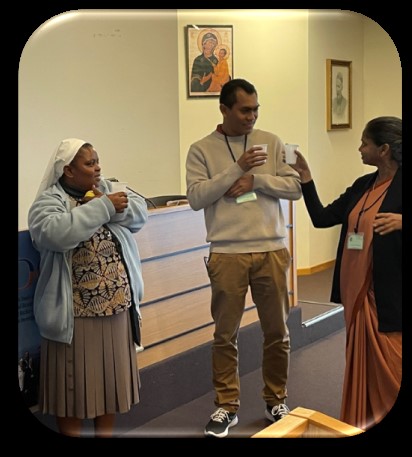
The Residential Seminar organized by SEDOS at Centro Ad Gentes from 4–8 May 2026 provided a meaningful opportunity for prayer, dialogue, theological reflection, and missionary encounter. As a student and participant, I consider this seminar a grace-filled experience that enabled me to engage deeply in the contemporary mission of the Church through discussion, sharing, and communal discernment. The theme, “Mission as Dependence on God and Solidarity with the Marginalized,” offered profound insights into the nature of Christian mission in today’s world and invited all participants to reflect critically on the Church’s prophetic vocation among the poor and excluded.
Throughout the seminar, the various presentations and testimonies of missionaries, religious sisters, and pastoral workers revealed the many dimensions of missionary discipleship grounded in faith, compassion, and service. The encounter with participants from different congregations and apostolic ministries became for me a journey of listening and learning. It opened new perspectives on the meaning of mission, particularly through concrete experiences among prisoners, street children, migrants, victims of prostitution, and communities affected by injustice and social exclusion. These testimonies demonstrated that mission is not merely an activity of the Church but a participation in God’s loving presence among those who suffer at the margins of society.
The Church continually reminds Christians that closeness to the poor is not simply an expression of humanitarian concern but an essential dimension of encountering Christ Himself. In his Apostolic Exhortation Dilexi te, Pope Leo XIV emphasizes that love for the poor is a privileged place of encounter with the Lord of history, who continues to speak through them (cf. Dilexi te, no. 5). This teaching became a source of personal reflection and spiritual challenge during the seminar. It encouraged me, as a religious missionary, to renew my commitment to walk humbly with the poor and marginalized, to listen attentively to their realities, and to proclaim the joy of the Gospel through presence, solidarity, and compassionate service.
The central theme of the seminar also led me to reflect more deeply on the words of “mission” and “marginalized” in the light of the spirituality and charism of St. Francis of Assisi, whose life was profoundly rooted in humility, poverty, and fraternity with the least. The witness shared during the seminar strongly resonated with the Franciscan understanding of mission as a journey of communion with the poor. In a special way, the fourth day of the seminar highlighted inspiring testimonies from priests and religious sisters who have dedicated their lives to ministries among prisoners, migrants, vulnerable women, street children, and victims of social injustice. Their witness revealed that the reality of poverty is not peripheral to the Christian faith but lies at its very heart.
This vision was further illuminated by the reflection of Fr. Dinh Anh Nhue Nguyen, who explained how Francis of Assisi transformed his privileged and wealthy upbringing into radical solidarity with the poor. St. Francis did not regard the poor merely as recipients of charity, but as brothers and sisters and living images of Christ. His spirituality teaches that authentic service to the poor must arise from genuine love, humility, and detachment from self-interest. To encounter the poor, therefore, is to encounter Christ crucified and to rediscover the Gospel in its simplicity and truth.
Inspired by the rich experiences and reflections of these five days, I have chosen to write this paper under the title “Walking with the Marginalized: Mission in the Spirit of St. Francis.” This reflection seeks to explore the theological and pastoral implications of Christian mission among the poor and excluded. In particular, the paper will address three fundamental questions. First, what does “walking with the marginalized” teach us about dependence on God and authentic Christian discipleship? Second, how does the spirituality of St. Francis of Assisi inspire the Church’s mission among the marginalized today? Third, in what ways can the Church truly become a “Church for the poor”? These questions emerge from the insights shared by the speakers, the group discussions, moments of prayer, and the personal encounters experienced throughout the seminar. Through this reflection, I hope to deepen an understanding of mission as a call to solidarity, humility, and faithful witness in communion with the poor, following the example of Christ and the spirit of St. Francis.
Walking with the Marginalized: Dependence on God and Authentic Christian Discipleship
On the first day of the seminar, Most Rev. Samuele Sangalli began his keynote address with the words from the Prologue of the Gospel of John: “All things came to be through him, and without him nothing came to be” (Jn 1:3). Reflecting on this passage, Sangalli explained that from the earliest centuries of Christianity, the Church, especially through the Fathers of the Council of Nicaea (325 AD), affirmed the Good News that God Himself, in the person of the Son, entered human history and became united in solidarity with every human condition. Through participation in the life and mysteries of the Church, humanity is invited to share in the divine life itself.1
Grounded in Sacred Scripture and the teachings of the Church Fathers, Christians are called to participate in and continue the mission of Jesus Christ. The mission of the Church is therefore not autonomous or self-generated; rather, it depends entirely on God. As the Catechism of the Catholic Church teaches: “The mission of Christ and the Holy Spirit is brought to completion in the Church, which is the Body of Christ and the Temple of the Holy Spirit.”2 The Church exists as the sacramental continuation of Christ’s salvific presence in the world. She is entrusted with proclaiming the words of Christ and mediating the saving grace of His death and resurrection so that people of every age may encounter salvation.
This understanding reminds Christians that the Church’s mission is fundamentally participatory: believers share in Christ’s own mission of service, compassion, and reconciliation. In the words of St. Paul, the Church is called to “have the same attitude that was in Christ Jesus” (Phil 2:5). Such an attitude demands that Christians move beyond comfort and security toward the existential peripheries of society, accompanying the poor and marginalized just as Christ Himself did.
The seminar participants repeatedly emphasized that walking with the poor and marginalized is not merely an act of charity directed toward passive recipients. Rather, this encounter becomes a privileged place of learning and conversion for the Church herself. The poor are not only receivers of the Church’s mission; they are also bearers of the Gospel and teachers of authentic discipleship. Through listening to their experiences, struggles, faith, and resilience, the Church comes to a deeper understanding of the demands of the Gospel. In this way, accompaniment of the marginalized reveals the Church’s dependence on God, since true mission cannot be carried out through human strength alone but requires humility, openness, and continual conversion.
1Cf. St. Athanasius, On the Incarnation, 54: “For the Son of God became man so that we might become God.” See also Catechism of the Catholic Church (CCC), no. 460.
2Catechism of the Catholic Church, no. 737.
In this context, Archbishop Samuele Sangalli strongly emphasized the urgent need for proper formation within the Church. He observed that the diminishing presence of Western missionaries has left many seminaries and religious institutes struggling to ensure qualified formation, especially for consecrated persons who embody the Church’s merciful closeness to the poor. Their vocation becomes a living echo of God’s love for those on the margins of society. This concern resonates with the words of St. Paul to the Galatians: “My little children, for whom I am again in labor until Christ is formed in you” (Gal 4:19). Christian formation, therefore, is not merely academic or institutional; it is fundamentally Christocentric. Seminarians, religious, and all missionary disciples are called to be conformed to Christ, who came “not to be served but to serve” (Mk 10:45).
This challenge invites the Church to renew seriously her commitment to missionary formation today. Those responsible for seminaries and formation houses are entrusted not simply with preparing future ministers intellectually, but with shaping disciples who embody the compassion, humility, and sacrificial love of Christ. Authentic missionary discipleship demands men and women capable of accompanying the poor with integrity, solidarity, and spiritual maturity.
The seminar also highlighted the diverse contexts in which the Church carries out her evangelizing mission. Many participants shared experiences of mission through schools, hospitals, social outreach programs, and other apostolic works. Such ministries seek to manifest the image of a servant Church with a preferential option for the poor.3 At the same time, participants recognized the emergence of new forms of poverty and marginalization in contemporary society—social exclusion, migration, loneliness, unemployment, and spiritual emptiness—which challenge the Church to respond creatively and prophetically. For this reason, authentic Christian discipleship requires greater cooperation, deeper formation, and renewed missionary zeal. In his welcoming address, Fr. Alain Mayama, CSSp, identified three essential attitudes necessary for missionaries today: docility, reliability, and fidelity.
First, docility refers to humility before God. Since mission belongs ultimately to God, missionaries are called to recognize their dependence on divine grace rather than relying solely on personal abilities. Fr. Mayama stressed the importance of prayer, Lectio Divina, and the Eucharist as indispensable foundations for missionary life. Walking with the marginalized teaches missionaries that they themselves are spiritually poor and dependent upon God’s sustaining grace.
Second, reliability and credibility concern the integrity and consistency of the missionary witness. Missionaries are called to reveal the compassionate and loving face of Christ through concrete actions. Service to the poor cannot be reduced to words or programs alone; it requires authentic witness. Credibility emerges when missionaries embody the Gospel values they proclaim.
Third, fidelity refers to the enduring commitment to God’s mission. Service to the poor is not optional but belongs to the very heart of the Church’s identity and vocation. Fidelity means continually saying “yes” to Christ’s call, even amid difficulties and uncertainties. Such perseverance becomes possible only through a deep and abiding relationship with Christ Himself.
Ultimately, the witness of missionaries who dedicate themselves to the poor and marginalized continues to reveal the authentic face of Jesus Christ and the true nature of the Church. Despite the many challenges confronting the Church today, there remains hope that through ongoing formation, spiritual renewal, and faithful accompaniment of the marginalized, the Church will continue to embody Christ’s mission in the world. Formation and education for missionaries, seminarians, and religious men and women must therefore be given renewed attention so that future disciples may offer outstanding service rooted in communion with God and expressed through loving service to the poor.
3Cf. Pope Francis, Evangelii Gaudium, no. 198: “The Church has made an option for the poor which is understood as a special form of primacy in the exercise of Christian charity.”
The Spirituality of St. Francis of Assisi and the Church’s Mission among the Marginalized Today
On the second day of the seminar, Fr. Dinh Anh Nhue Nguyen, OFMConv, delivered a presentation entitled “The Franciscan Response to the Cry of the New Poor.” In his talk, he reflected on the life and missionary vocation of St. Francis of Assisi as a model for the Church’s mission among the poor and marginalized in the contemporary world. He emphasized that Francis transformed his life from that of a wealthy merchant’s son into a radical witness of evangelical poverty, humility, and service. Following his profound spiritual conversion, Francis publicly renounced his father’s wealth and social status in 1206 by stripping himself in the public square, symbolically embracing what he called “Lady Poverty.” 4 This decisive act marked the beginning of a life wholly centered on the imitation of Christ.
The spirituality of St. Francis was rooted in a missionary approach characterized by humility, peaceful presence, fraternity, and solidarity with the poor. Rather than seeking power or privilege, Francis instructed his followers to live among the poor, work with their hands for daily sustenance, and proclaim the Gospel primarily through the witness of their lives. Preaching, for Francis, was inseparable from concrete acts of love and service. His spirituality reflected a deep conviction that every human person possesses inherent dignity as a child of God. Moreover, his love for creation, beautifully expressed in the Canticle of the Sun, revealed his belief in the interconnectedness of all creation as gifts from God and signs of universal fraternity. 5
Fr. Nguyen further explained that Franciscan poverty is not merely material deprivation but a spiritual imitation of Christ’s humility and self-emptying (kenosis). Poverty, humility, and kenosis are inseparable dimensions of the Christian vocation because they mirror the mystery of the Incarnation, in which God humbled Himself in becoming human. 6 In this perspective, the practice of poverty becomes an expression of love for God and neighbor. It involves willingly renouncing privileges and attachments to become more available to others, especially the poor and forgotten. Thus, the witness of St. Francis challenges Christians today to embrace solidarity with those who suffer injustice, discrimination, and marginalization.
The missionary example of St. Francis continues to inspire the Church’s commitment to the poor in the modern world. His life demonstrates that authentic evangelization requires closeness to those who suffer and active participation in their struggles for justice, peace, and human dignity. In this regard, Pope Francis, in his Message for World Mission Day 2025, called the faithful to walk in the footsteps of Christ and become “signs and messengers of hope” in every circumstance of life.7 All the baptized, as missionary disciples, are called to make the hope of Christ visible in every corner of the world through lives of charity, compassion, and service.
A significant aspect of Fr. Nguyen’s reflection was the centrality of the Eucharist in missionary spirituality. He stressed that the Eucharist is the source of inspiration and strength for Christian mission because it unites missionaries with Christ Himself. The mission of the Church is not merely a human undertaking but participation in the mission of Jesus Christ. Communion with the Lord through the Eucharist, prayer, and contemplation gives missionaries the courage and credibility to proclaim the Gospel authentically. St. Francis himself recognized in the Eucharist the virtues of Christ’s humility, obedience, simplicity, and poverty. As a contemplative deeply transformed by his encounter with Christ in the Eucharist, Francis became capable of proclaiming the Gospel with conviction and joy. Likewise, Pope Leo XIV, in his Message for World Mission Day 2026, emphasized that being “one in Christ” requires Christians to keep their gaze fixed on the Lord so that Christ becomes the center of all relationships, words, and actions.8
4St. Bonaventure, Legenda Maior of St. Francis, II, 4.
5St. Francis of Assisi, Canticle of the Creatures (Canticle of the Sun).
6See Phil. 2:5–11 on Christ’s kenosis and humility. Cf. History of Religious Life St. Francis of Assisi and the Witness to Evangelical Poverty - Part 1 by Fr. John A. Hardon, S.J.
7Pope Francis, Message for World Mission Day 2025.
The Church today remains aware of the many challenges faced by the poor and marginalized. Nevertheless, she continues her mission as a sign and sacrament of unity among peoples through dialogue, reconciliation, solidarity, and compassionate service. Faced with the “cry of the poor,” Christians are called not only to help in offering assistance but also to become “artisans of hope” who help restore dignity to wounded humanity. Pope Francis repeatedly emphasized that missionary disciples must respond creatively and courageously to the sufferings of the world by embodying the hope of the Gospel. Similarly, Pope Leo XIV affirmed that the entire Church shares responsibility for evangelization through prayer, witness of life, and active participation in missionary work.
In the final part of his presentation, Fr. Nguyen addressed the emergence of a “new missionary age” shaped by social communication and digital media. In the contemporary world, social media has become an important avenue for evangelization and human outreach. The Church is therefore challenged to proclaim Christ not only through traditional missionary activities but also through responsible and meaningful engagement in digital spaces. Modern means of communication can become instruments for spreading the Gospel, defending human dignity, and reaching those who seek meaning, hope, and spiritual guidance. As many participants in the seminar observed, the Church must increasingly enter this new missionary frontier to accompany people in today’s rapidly changing society.
In conclusion, the spirituality of St. Francis of Assisi continues to inspire the Church’s mission among the marginalized by calling Christians to live the Gospel through humility, solidarity, and compassionate service. To follow Christ authentically requires proximity to the poor and attentiveness to their cries. St. Francis embodied this radical availability through concrete acts of friendship, service, and proclamation of the Gospel. He used his hands, feet, and voice to communicate God’s love and peace to others. In the present age, Christians are likewise called to use not only personal witness but also modern means of social communication to proclaim the Gospel and invite others to conversion, reconciliation, and love. Through such witness, the Church continues the Franciscan mission of bringing hope, peace, and human dignity to a wounded world.
A Church for the Poor: Missionary Witnessing and Christian Accompaniment
On the fourth day of our seminar, we reflected on Dilexi te through the theme, “A Church for the Poor.” For me, the session became another meaningful and inspiring journey of theological reflection and missionary awareness. The seminar featured four panelists engaged in different apostolic ministries and missionary contexts. Listening to their experiences was both challenging and enriching, especially in seeing how they imitate Jesus Christ in caring for the poor, the marginalized, and the abandoned. I deeply admire their dedication and commitment in proclaiming the joy of the Gospel and in bringing people closer to the Lord Jesus Christ through concrete acts of charity and accompaniment.
The first speaker was Sr. Anicette Lantonkpode, OLA, who ministers to migrants and women involved in prostitution. She shared the many difficulties she encounters in accompanying these women and helping them rediscover their dignity and purpose in life. There are moments, she explained, when she needs to meet them even late at night to respond to their situations personally. Her ministry also exposes her to the dangers connected with human trafficking and organized crime. Nevertheless, she emphasized the importance of collaboration with parishes and dioceses in organizing programs that include spiritual formation, skills training, and pastoral care for these women. Her testimony reveals that a Church for the poor is a Church of accompaniment, healing, and compassionate guidance. It reflects Pope Francis’ vision of a Church that “goes forth” to the peripheries of society to restore human dignity and hope.9
8Pope Leo XIV, Message for World Mission Day 2026.
The second speaker was Fr. Vincent Anes, CMF, who is engaged in the ministry of Justice, Peace, and Integrity of Creation (JPIC) in India. The widespread poverty in his context has inspired him to dedicate his mission to orphans and street children. In sharing his experiences, he highlighted the deep emotional and spiritual wounds suffered by children who grow up without parental care and security. Many of these children question the presence of God amid their loneliness and suffering. Their cries become the cries of Christ Himself, inviting the Church to become more attentive, compassionate, and creative in responding to their needs. Fr. Vincent stressed the importance of education, moral formation, and creating a safe and nurturing environment for these children. In this context, a Church for the poor becomes a Church of parental care, educational support, and hope for the future. 10
The third speaker was Sr. Paola Vizzoto, PIME, who ministers to prisoners. I was deeply moved by her witness because, despite being in her eighties, she continues to serve with missionary zeal and compassion. She reminded us that Christians are not called to judge prisoners but to visit and accompany them with mercy and understanding. Her ministry emphasizes the healing power of presence, listening, and respect for human dignity. She explained that missionaries are called to communicate love and hope even in places marked by suffering, guilt, and rejection. In this situation, a Church for the poor is a Church of spiritual accompaniment, reconciliation, and restorative justice.11
The fourth speaker was Fr. Massimo Vedova, FMC, who works with street children in Italy. He presented the growing socio-economic challenges in Europe, particularly the reality of children abandoned by both families and society. According to him, the mission is not only to provide food and shelter but also to educate children morally and spiritually so that they may discern what is good and right. He emphasized the need for the Church to collaborate with governments and social institutions in addressing the increasing number of vulnerable children on the streets. Furthermore, he challenged Christians to leave their comfort zones, encounter these children personally, and dedicate time to listening, teaching, and guiding them toward a better future. Here, a Church for the poor is understood as a Church that provides protection, education, psychological support, and spiritual care.
The testimonies and experiences shared during the session clearly reveal the missionary nature of the Church. Religious sisters, priests, and missionaries work within complex social realities while remaining faithful to the Gospel message. Their ministries embody witnessing to Christ, promoting the values of the Kingdom of God, defending human dignity, fostering dialogue, and sharing the experience of God’s love with others. Through these apostolic works, the Church continues her mission of proclaiming Jesus Christ and bringing people closer to Him.
We truly appreciate the countless religious sisters, brothers, and priests who dedicate their lives to missionary service amidst the many struggles and problems of society. Their witness reflects a radical commitment to the evangelical counsels, a spirit of generosity, and a profound availability for mission. They continue to make an immense contribution to the Church’s evangelizing mission by embodying what it truly means to become a Church for the poor.
At the same time, the seminar reminded us that every Christian has a responsibility to respond to social problems and human suffering. The mission of the Church is not limited to ordained ministers or religious missionaries alone but belongs to the entire People of God. In all apostolic activities, Christ must remain at the center so that those whom we serve may encounter Him and experience salvation. This recalls the missionary command of Jesus to His disciples: “You shall be my witnesses in Jerusalem and in all Judea and Samaria and to the ends of the earth” (Acts 1:8).
9Pope Francis, Evangelii Gaudium (2013), nos. 20–24.
10Pontifical Council for Justice and Peace, Compendium of the Social Doctrine of the Church (2004), nos. 238–245.
11Pope Francis, Fratelli Tutti (2020), nos. 263–270.
I realize that there can be no authentic mission without credible witnessing. Pope Paul VI, in his Apostolic Exhortation Evangelii Nuntiandi, described witnessing as “the test of truth” and “the touchstone of evangelization.”12 A Church for the poor therefore calls both individuals and communities to become Christ-like not only in words but also in actions. The Church is called to stand beside the poor and marginalized who struggle against conditions that keep them excluded from the fullness of life. Consequently, solidarity with the poor, participation in their struggle for justice, educational and financial assistance, and the awakening of social conscience are all concrete expressions of the integral salvation offered by God through Jesus Christ.13
Ultimately, becoming a Church for the poor means becoming a Church that listens, accompanies, heals, educates, and serves with humility and compassion. The witness of these missionaries reminds us that evangelization is inseparable from charity, justice, and human dignity. In encountering the poor, the Church encounters Christ Himself, who continues to identify with “the least of these” (Mt 25:40). Therefore, the mission of the Church remains a living witness of God’s love revealed in Jesus Christ for all humanity.
Your conclusion already has a strong message and clear missionary spirit. I polished and reorganized it to make it more academic, coherent, and fitting as the final part of a paper while preserving your original ideas and content.
Conclusion
The five-day Residential Seminar on Mission was both intensive and enriching. It provided a meaningful opportunity for listening, discussion, and the sharing of valuable insights and perspectives on mission. More importantly, it became a wonderful encounter among people who have committed themselves to missionary work, especially in serving the poor and marginalized, following the missionary example of Jesus Christ who came “not to be served but to serve.”
This seminar strengthened our awareness that the Church today is called to stand with the poor because the Church herself is poor and for the poor. In this spirit, we are inspired by the life and mission of St. Francis of Assisi, who dedicated himself wholeheartedly to the service of the poor. As one Church, we renew our commitment to work together in unity and communion, promoting the Gospel and defending human dignity through all our missionary activities, especially in caring for those who are most in need.
Furthermore, the seminar emphasized the importance of missionary formation and ongoing formation in preparing faithful and effective workers for the mission. Missionary formation should not remain merely theoretical or academic; rather, it must also include exposure to real missionary experiences, direct encounters with the poor, and active participation in evangelization. Mission calls every missionary to move beyond comfort zones and to encounter Christ in the lives of the poor and marginalized.
I would also like to express my sincere gratitude to the organizers, SEDOS, for accepting my scholarship application and for giving me the opportunity to participate in this Residential Seminar. The experience has been both inspiring and formative for my personal and missionary life.
Finally, mission is inseparable from the missionary. The missionary must become a living witness of the mission he proclaims. Just as Jesus Christ identified Himself completely with His mission, so too every missionary is called to embody the Gospel through word, witness, and service. When the missionary is continually renewed by Jesus Christ and faithfully lives out the mission, then the mission itself gains credibility and becomes a true sign of God’s presence in the world.
12Pope Paul VI, Evangelii Nuntiandi (1975), no. 41.
13Second Vatican Council, Gaudium et Spes (1965), no. 1.