Renewed in Mission My Gratitude to SEDOS
From May 4–8, 2026, I had the profound privilege of participating in the international missionary seminar hosted by SEDOS at Nemi, Rome. The program focused intensely on ongoing formation, the theology of the poor, and contemporary pastoral challenges. This transformative intellectual and spiritual journey has deeply enriched my vocation and leadership perspective as a member of the Holy Union Sisters Leadership Team in Tanzania.
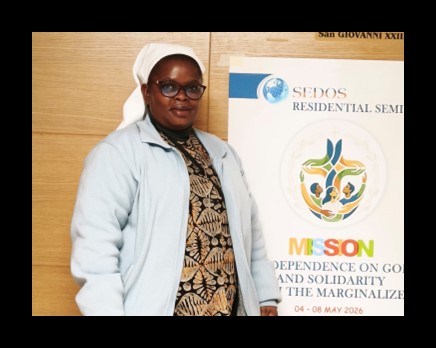
Heartfelt Gratitude to SEDOS
I extend my deepest gratitude to the leadership and entire community of SEDOS for granting me the scholarship to attend this vital seminar.
Igniting the Fire: The trust you placed in me has expanded my intellectual horizons and reignited the missionary fire within my heart.
Global Solidarity: This scholarship provided a vital bridge allowing me to connect, share, and learn alongside 48 fellow missionaries from all corners of the world.
A Shared Journey: I was deeply blessed to experience this seminar alongside my fellow Tanzanian leadership team members, Sr. Dostea and Sr. Agatha. We were also enriched by sharing this collaborative space with Sr. Emerentia, Sr. Norah, Sr. Elizabeth, and Sr. Paschalina from the Cameroon area, bringing our collective African missionary realities to the global stage.
Core Seminar Dimensions
Our formation at Nemi focused on three dimensions that speak directly to our pastoral mission in East Africa:
The Theological Option for the Poor: We reflected on how serving the marginalized is a strict Gospel imperative, not optional social work. Drawing from St. Francis of Assisi, we explored how Christ lives within the poor, calling us to uphold human dignity based on who people are, not what they possess.
Global Pastoral Realities: The seminar shed light on structural social wounds that closely echo our challenges at home. We examined the harsh realities of migrant ministry (exemplified by the Sant’ Egidio community), street children outreach, prison chaplaincy, and global human and organ trafficking.
Conversation in the Spirit: We were trained in synodal methodologies of deep, structural listening and speaking from the heart. Led by mentors like Sr. Lieve Stragier, ICM, this framework serves as an essential tool for communal decision-making, ensuring no voice is excluded.
Moving Forward: Local Action in Tanzania
These lessons will not remain confined to my notebook. Alongside Sr. Dostea and Sr. Agatha, I am fully committed to implementing these insights practically across our local grassroots ministries:
Strengthening Anti-Trafficking Networks: Grounded in the truth that makes us free, I will bring these global perspectives back to our anti-human trafficking campaigns under the Tanzania Catholic Association of Sisters (TCAS) and Thalitha Kum Tanzania. We will expand targeted training across highly vulnerable border dioceses including Musoma, Kigoma, Mtwara, Tanga, and Same focusing on schools, mosques, churches, and universities.
Expanding Safe Spaces: Our efforts will prioritize building stronger collaborations with the Ministry of Home Affairs to set up school clubs, community watch groups, and urgently needed safe houses to rescue and shelter trafficking survivors.
Stepping Beyond Comfort Zones: Aligning with our Holy Union Sisters 50-year legacy of service in Tanzania and our profound 200-year legacy of global mission in the world, we will deepen our presence among the vulnerable. This includes expanding local urban support networks, advocating against environmental pollution threatening our villages, and strengthening community development.
I return to Tanzania with a renewed spirit, carrying the profound reminder from this seminar that “Mission is where love becomes visible.” Thank you, SEDOS, for equipping our team with the tools to continue transforming lives in our communities.