My experience at the SEDOS Residential Seminar
The SEDOS (Service of Documentation and Study on Global Mission) Residential Seminar took place at Nemi Village, Centre Ad Gentes, from Monday, 4 May 2026, to Friday, 8 May 2026. SEDOS, a forum open to Roman Catholic institutes of consecrated life, organises these annual seminars to deepen participants’ understanding of global mission. This year’s theme, “Mission as Dependence on God and Solidarity with the Marginalised,” brought together people from every corner of the world. I was honoured not only to participate but also to share my experiences and reflections during the seminar.
Upon our arrival on Monday afternoon, Bishop Samuele Sangalli, Adjunct Secretary of the Dicastery for Evangelisation, warmly welcomed us. He spoke passionately about the Church’s need to return to its source, who is Christ. He also shared insights into his work at the Dicastery as preparations continue for the global exchange of missionaries to strengthen evangelisation.
In his presentation, he emphasised that mission lies at the heart of the Church, not merely the preservation of doctrine. According to him, the Church fulfils its mission through authentic love for the poor and for one another. He strongly highlighted the concept of the “new poor.” These include not only the materially poor, refugees, migrants, and victims of war, but also those who suffer spiritual, emotional, cultural, digital, and existential poverty despite having many opportunities in life.
He explained that the Church must develop new approaches to respond effectively to these emerging forms of poverty. Within the Church itself, he identified poverty in formation and stressed the need for missionary institutes to support younger Churches through quality formation. He further noted that the transfer of responsibility for Western churches to missionaries from other regions should be accompanied by proper training in financial management and intercultural living. His joy, enthusiasm, and dedication to the growth of the Church deeply inspired us.
The second day focused on Franciscan spirituality. Fr. Dinh Anh Nguyen, Secretary General of the Pontifical Mission Union, reflected on the Franciscan response to the cry of the poor. He highlighted the famous cry of Saint Francis: “Love is not loved.” Christ Himself, who is love, remains unloved by many. This realisation emerged from Francis’ encounter with Christ and later with the lepers of his time.
He reminded us that mission begins with encounter. Mission is Ad Gentes — going beyond borders and beyond ourselves to meet others. Saint Francis recognised the face of Christ in the poor and saw them as brothers and sisters rather than objects of pity. He brought them not only material assistance but also divine consolation. Poverty, for Saint Francis, created evangelical freedom. Having nothing to rely on opened the door to creativity and complete dependence on God.
Drawing from the message of Pope Leo for the One Hundredth World Mission Day 2026, he invited us to unity in Christ and in mission. He stated, “If unity is the condition for mission, then love is its essence.” The Church today must become a living presence and not merely a structure.
The theme of the third day, “God Chooses the Poor,” explored Chapter Two of Dilexi Te by Pope Leo XIV. Fr. Edgardo Guzman, a Claretian Missionary Father, reflected deeply on Christ’s love for the poor and the invitation to respond to their cry. He presented Jesus as the poor Messiah who comes to humanity through the Incarnation. He explained that the preferential option for the poor does not exclude others but instead places the poor and excluded at the centre of attention.
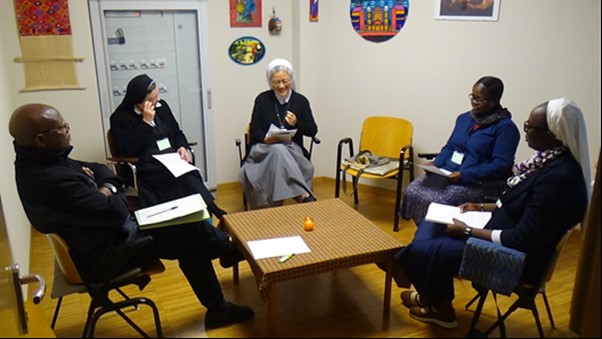
God chooses the poor not because they are perfect, but because His love is unconditional. His mercy reveals the depth of that love. Living among the poor therefore becomes a mutual experience of giving and receiving. While we respond to their needs and bring Christ to them, they teach us simplicity and renew our capacity to love Jesus more deeply.
The fourth day focused on “The Church for the Poor” and challenged us to move from intentions to concrete action. Four guest speakers shared their missionary experiences, convictions, and commitment to encountering Christ in the poor and in those living on the margins of society.
Sr. Anicette Lantonkpode, OLA, shared her ministry among trafficked girls and women. Many leave their homelands in search of a better future only to end up exposed to violence, drugs, and sexual exploitation. Together with her team, she reaches out to them where they are. Rather than forcing change, they accompany the women in their daily struggles. Trust gradually develops as the women witness the sisters risking their lives to support them. Through prayer, emotional support, and practical assistance, they help restore hope and dignity.
Sr. Paola Vizzotto, PIME, spoke about her long-standing prison ministry, especially among female prisoners. With remarkable compassion and commitment, she listens to them, accompanies them, restores their dignity, and advocates for them. What began as a personal conviction has grown into a powerful ministry of presence among people often forgotten by society.
Fr. Massimo Vedova, FMC, works with street children in Italy. He challenged us with a thought-provoking question: “After all the studies and degrees obtained in the Church, what next?” According to him, years of formation lose meaning if they do not lead us to encounter Christ in the poor. He stressed the importance of offering hope and standing beside those living on the margins. Through his ministry, he has become a father figure to many children living on the streets.
Fr. Vincent Anes, CMF, shared his missionary work among indigenous communities in India. Although cultural traditions sometimes limit the public expression of Christian faith, the people’s love for Jesus remains profound. Without opposing their culture or focusing solely on formal baptisms, he simply introduced people to Christ. Many came to know, love, and witness to Jesus in their own context.
The seminar provided a valuable opportunity to revisit familiar ideas while discovering new and meaningful ways of responding to the needs of the Church today. One of the most important lessons I learned was a deeper understanding of poverty in the modern Church. Poverty is no longer limited to material deprivation or marginalisation. Even those who appear materially comfortable may experience profound forms of poverty.
I realised that the Church has always been, and continues to be, a poor Church. In one way or another, we are all poor and in need of one another. Since there is no salvation without our neighbour, our relationship with others becomes central to Christian life and mission.
Those who lack material necessities need food, shelter, and clothing, while those with material wealth may suffer emotional, spiritual, or relational poverty. Our mission therefore begins when we move beyond ourselves, overcome selfishness, and respond to the needs of others. The Church continues to grow as a global family, reaching out to her members and rediscovering her true mission: bringing Christ to His people.
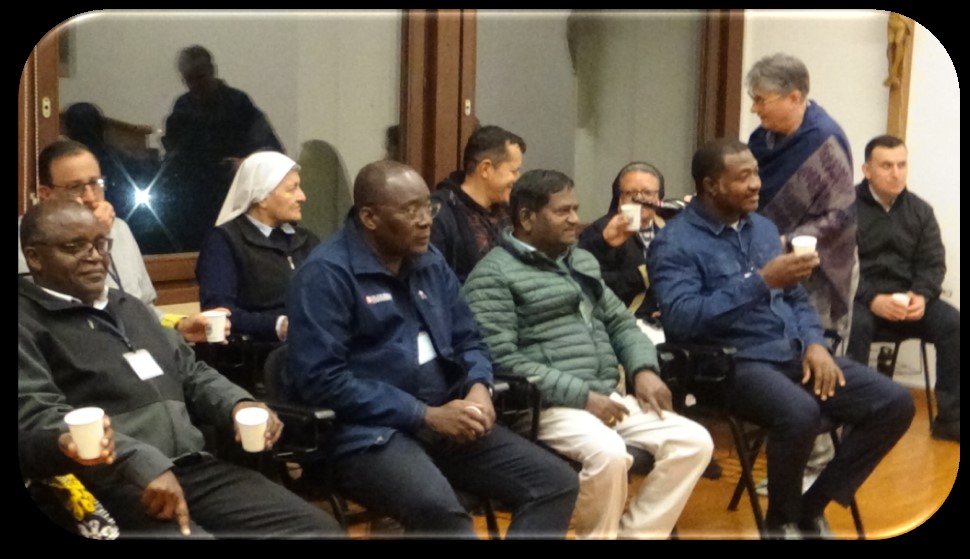
As someone serving in a country marked by war and political instability, this seminar has strengthened my commitment to the many people I encounter daily: the hungry, the traumatised, those separated from their families, the disappointed, and young people struggling to find their place in society and in school communities. I feel called to move beyond fear, inadequacy, and insecurity in order to reach out more generously to those around me. Today, it is authentic presence, more than structures, that builds the Church.
God is present wherever human suffering is hidden. For this reason, I recognise the importance of collaboration and networking with others in order to reach a greater number of God’s beloved poor.
Throughout these days together, I was reminded that the visions, miracles, and testimonies of faith in the Church and in our personal lives often remain hidden in memory. We therefore need moments of silence and reflection to revisit the past and recognize God actively at work in our lives and in His Church.
Participating in the SEDOS Residential Seminar 2026 was a truly transformative experience. I return renewed, inspired, and ready to respond more fully to the needs of the Church revealed in the cry of the poor and those living on the margins. Ultimately, mission does not belong to us; it belongs to God. He calls us, guides us, and remains at the centre of every mission. Through Christ, we encounter and serve His people.
I sincerely thank SEDOS for making this enriching experience possible.
I conclude by asking God to abundantly bless the entire SEDOS team for their wisdom, dedication, and generosity in organising this seminar. May God continue to reward your efforts. I encourage everyone who has the opportunity to participate in future SEDOS seminars not to miss this valuable experience of deepening their understanding of the Church’s global mission and their active role within it.