Reflection of the Participants on the Residential Seminar
1. Missionary Institutes in the Process of Synodality
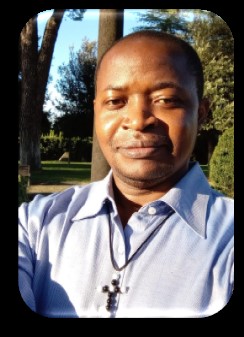
Having participated at the SEDOS Seminar that was held at Nemi from 16th to 20th June 2025, I acknowledge that it was an extraordinary experience for me. About 30 Missionary Institutes were represented. This illustrates how international and intercultural the Seminar presented itself. By the diversity of the participants at the Seminar, it can easily be pointed out that the Spirit of Synodality was already in operation. The theme for the Seminar was as follows: Missionary Institutes and Synodality: Charism, Prophecy and Witness. One of the fundamental questions that helped me to get into the Seminar was: «How can the process of Synodality help us enrich our missionary experience? ». It’s important to bear mind, in the first place, that Synodality is a continuous process. It calls for openness and conversion both at personal and community levels. Coming together to share our missionary experiences is something that has its significance in the process of Synodality. It somehow challenges each member of a particular Missionary Institute to take some time to recollect in order to draw some qualities from one’s identity and origin, but at the same time to appreciate the value of other Missionary Institutes with which we are called to journey together.
In her introductory presentation, Sr. Mary Barron, OLA affirmed that Synodality is a way of being Church together. Together, we are called to respond to the needs of our time. Despite the fact that there are so many challenges and difficulties in the world today, Christ remains our hope1. We can take Christ’s example of how to encounter people from different cultures and religions. This will help us to develop a culture of encounter so that we may know how to interact or journey together with people from different cultures and origins. In fact, looking at the pluralism context today, it’s inevitable to live without taking into consideration the intercultural and interreligious aspects. As missionaries, we cannot be indifferent but instead, must search for means to create an environment that is favourable for every human person. In this regard: «How can we contribute to the promotion of life in the world today? To accept and to be ready to be transformed by the Holy Spirit will surely play a very important role if we would like to contribute favorably to the promotion of life in today’s world. In fact, our openness to the guidance of the Holy Spirit is a reminder that as we engage ourselves in mission today, God should be considered as the origin and the main objective for which our missionary life and activities are directed. As Sr. Mary Barron concluded her introductory presentation, she invited the participants in the following terms: «Let us use this time to listen, discern and to respond in our missionary journey»2. I personally experienced this particular invitation to be the point of entrance into the Seminar itself and it motivated me to really feel part of the Seminar with renewed enthusiasm.
Walking together as missionaries
Walking together as missionaries is one of the tasks we are called to accomplish in order to respond to today’s needs and challenges. In order to become a Church of hope, I think it’s important that every baptized Christian develops a sense of belonging to the Church. It helps in assuming one’s responsibilities. For this reason, I found this question very significant during the presentation of Cardinal Tagle: «How can I walk with others? ». The starting point should be with oneself before looking at the community level. Understanding the active participation in mission, each person is invited to accomplish it with an attitude of openness to God who is at the center of mission itself. In fact, through our simple gestures and actions that are done on a daily basis, God always find his ways of reaching to each person.
Our engagement and efforts as missionaries may not always be recognized nor appreciated by others. But this should not discourage us. Jesus has something to teach us today. He continued his public ministry despite the Pharisees who criticized him of driving out the demons using the power of the prince of demons (cf. Mt 9:32-38). In living in a Synodal way, our call is to find ways and means to announce the person of Jesus that will be significant to people living in different contexts today. How could we find the language that will touch people’s lives? Our engagement in mission today, should be based on our relationship we with God so as to be open to the signs of time and be ready to respond according to the guidance of the Holy Spirit.
As missionaries in a Synodal Church, we are called to review our coming together as people of different cultures. It is in fact, to be regarded as the richness that we obtain through our interactions and relationships with one another. The Synodal process itself finds meaning and expression when the spirit of interculturality is respected and practised both inside and outside the Church. In this way, mission itself will be expressed in a renewed manner and at the same time the Church regains its sacramental effect in today’s context.
Charism
Speaking about charism, it’s important to note that it could be understood at different levels. No matter the form of charism, there’s the Spirit that must be respected if we are to move together in the process of Synodality. According to St. Paul, charisms are meant to be used for the good of the whole community (Cf. 1 Cor 12:7-10; Rm 12:6-8). Once we understand this better, it helps us to avoid some personal charisms that may end up turning into ambitious personal projects that do not allow other community members to participate. This particular attitude is against the Spirit of walking together as a Synodal Church. It simply implies that if someone cannot live the charism inside his or her own Missionary Institute, it will not be possible to live it with other people from other Institutes. Therefore, it is important to practice the charism of the Institute starting from his one’s own community.
How do we help those who seem to have personal charisms within our communities? The first thing is to continue encouraging them and to help them believe in the value of their own talents. To be present and assure them our support when they are going through some challenges. Secondly, sometimes when we notice that they start lacking some patience because they want their project to move faster than the community, it will be important to dialogue with them about their personal charism. This kind of dialogue may help them to see how to collaborate with the objectives of the entire community and so help them to avoid separating themselves from the main charism of their Missionary Institute.
It’s important to note that each Institute has its own charism. The main charism of a particular Institute can be lived in different ways according to the various groups. For instance, the question of dialogue is very important when it involves different levels such as male, female, laity etc. Dialogue should not only be limited at this level; it should also do in collaboration with other actors of the society from different fields of specialization. Rediscovering the richness of collaborating with the Laity could be one aspect that may be so important when we consider the Spirit of a Synodal Church as well as our objective of journeying together as Missionary Institutes today. Our task is to find ways to respond to some challenges that the Church is still facing today such as clericalism, injustice, sexual abuse, corruption etc.
Prophecy
Prophecy in both the Old and New Testament has something to teach us about the Missionary Synodal Church today. Some Great Prophets teach us about their communion with God. They had very close relationship with God to which they remained faithful. According to Stephen Bevans, «a Prophet is someone who speaks forth. Once having discerned the Word of God, he faithfully announces a message either in words or deeds. Secondly, the Prophet “speaks forth” the future; in the sense of setting out a vision of what God has in store for people in his plan of salvation». This shows how faithfulness to God’s word plays a very important role in the life of a Prophet.
Senior and Stuhlmueller affirm that, «The prophetic traditions, had developed a sophisticated theology of the Word. God’s Word, as in the famous text of Isaiah 55:9-11, was experienced as creative and inevitably fruitful. The power of the Word is seen in [..] God who is not silent and distant, but who speaks to his people».3 This particular relationship between the word of God and God’s relation with humanity shows much interest in what humanity is experiencing. Therefore, through the word of God, we get God’s message and understand our human experience as missionaries today.
Prophets are called to be «strong and courageous». Of course, in moments of violent reaction from the people, the Prophet has to be with great conviction in carrying out his responsibility and to present God’s message with boldness. This equally applies to our context today. Through the sacrament of Baptism, every Christian has received the grace of being a Prophet. But what are the qualities the Missionary Synodal Church need to have in today’s world? We are called to be the voice of the voice-less. There are so many people who suffer all sorts of injustice, poverty, violence, abandonment, persecution etc.
As we carry on with our experience as Missionary Institutes in the Synodal Church, Jesus teaches us how to assume our prophetic responsibility in the world. According to Senior and Stuhlmueller, «Jesus is the Spirit-filled prophet who challenges the exclusive attitude of his contemporaries and suffers the rejection that the prophets of Israel had endured before him. […] Jesus also chooses the apt prophetic sign: table fellowship with outcasts, healings on the Sabbath, cleansing of the temple and so forth»4. We can clearly observe that Jesus shows some fundamental qualities of a Prophet. He proves to be courageous, not being indifferent in front of certain social or political issues of his context. Despite the threats from the contemporary civil and religious leaders, he kept on evangelizing with an objective of promoting the well-being of humanity. With this particular model, our experience as Missionaries in today’s context with its challenges, it will be of great importance to always refer to Jesus in order to respond with courage and conviction in our prophetic ministry today.
Witness
«How can we be witnesses of Synodality as Missionaries in the Church and in the world? ». This question tackles our identity and our way of living in the Church and the world today. As we consider the aspect of pluralism today, we easily realize that witness plays a very important role as we carry on God’s mission through our specific charisms as missionaries. For instance, local churches are important places where plurality in the context of Synodality is lived and expressed. It’s in this area where we are called to collaborate together with other actors in the society in order to form a Synodal Church that encourages the Spirit of well-being for every human person. In this way, we should promote awareness that each Missionary Institute has something special to contribute to the Synodal Church.
There are some challenges that some Missionary Institutes are experiencing in some parts of the world today. Some challenges concern the denial of visas for missionaries who would like to enter some particular countries where they have been assigned for mission; other missionaries experience persecution and discrimination because of their identity as Christians, in some countries religious freedom remains a challenge etc. But how could we, as Missionary Institutes, resolve such challenges and difficulties today? In most cases, it’s not so easy to find solutions to these challenges. However, there are some initiatives that some Missionary Institutes are taking in order to respond to these challenges. For instance, in India, six Missionary Institutes of Religious Nuns work together in order to overcome the challenges they face in that context5. Despite all these challenges and difficulties in our experience as Missionary institutes today, it’s important to keep our hope and our zeal for the mission. Indeed, God never abandons us and he entrusts us with the guidance of the Holy Spirit who is really the protagonist of mission.
Although there are many areas in which the Church is witnessing positively according to the message of the Gospel, there are also some wounds in the Church that need to be healed. For instance, the lack of trust for one another as members of the same missionary Institute or as members of the same diocese or Parish, remains a challenge that affect the whole Church. The question of tribalism continues to affect some particular African contexts and other parts of the world. In addition, the strive for power or responsibilities in the diocese and in Missionary Institutes is equally seen to be one of the wounds from which the Church should be healed. In fact, in some contexts, it’s not uncommon to note that some clergy tend to collaborate with the Laity with negative intentions of eliminating the other through poison or other means in order to obtain a post of responsibility in the Church. These examples are not in line with the message of the Gospel that we are called to proclaim. In fact, when we reach this extent, it clearly indicates that we are not in communion with the person of Jesus. Instead, we tend to give priority to our personal ambitions and selfishness.
Conclusion
In conclusion, it’s important to acknowledge the significance of this SEDOS Seminar in which members from different Missionary Institutes gathered and shared together this enriching experience. We are called to be open and to be humble as we continue God’s mission through our various charisms. Journeying together as Missionary Institutes in a Synodal Church requires willingness to collaborate and to find ways to become the Church that is prophetic and a witness. In this way, we are called to be creative in searching for methods that allow us to respond to the current challenges of our time but also to keep on with evangelization. Having put into consideration some challenges and difficulties, it’s important to keep reminding ourselves and to keep working on them so as to be healed from wounds that the Church is suffering today. It is this particular effort and engagement that will help us to undergo the process of purification with an intention of renewing our true identity as true followers and witnesses of Christ’s love today.
(Mukuka Humphrey, M.Afr)
2. Synodality as Unity in Christ
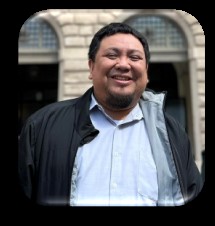
The Residential Seminar organized by the Service of Documentation and Study on Global Mission (SEDOS) exemplifies the principle of synodality, as its structure has been carefully designed to support the very content of the discussions. In addition to traditional academic presentations, significant focus was placed on Lectio Divina, Conversations in the Spirit, and engaging group dynamics to promote an environment of sharing and dialogue. The gathering of representatives, mostly congregational leaders from various missionary institutes, was a simple outward sign of our unity in Christ.
The unity of Christ’s calling to His disciples is deeply synodal, emphasizing the communal aspect of faith and mission. This unity is rooted in the shared life in Christ, where each disciple is called not only to follow but to actively participate in a mission that reflects His teachings and love. This unity underscores the significance of a collective identity within the body of Christ, where diversity is celebrated, yet all are united in purpose and faith. This foundational aspect reinforces the idea that being a disciple is not merely an individual journey but a communal one, with each member contributing to the greater mission of spreading the Gospel.
The Greek word «synodos» (σύνoδος) translates to «meeting» or «assembly». Historically, it refers to gatherings, particularly in religious or political contexts, where decisions are made or discussions occur. In the context of the early church, it often denoted councils of bishops coming together to address theological disputes or governance issues. The original concept of a synod comes from the idea of being gathered into an assembly united by shared faith as they face challenges together. Therefore, a synod is often considered equivalent to a council and is associated with terms like collegiality, sobornost, and conciliarity. The concept of synod has continued to influence modern church structures, where synods serve as significant decision-making bodies within various Christian groups, dating back to the Council of Nicaea.6
The theological concept of synodality emphasizes the importance of communal discernment and collaboration within the Church. It recognizes that the Holy Spirit guides not just the leadership but all members of the Church in their shared journey of faith. The concepts of synod and synodality do not primarily represent individual citizens; rather, they signify the vinculum communionis among members. The insights gained are reflected in the specific research experience and the practice of our mission.7 Synodality is not merely a shared journey along the way (ὁδός); it is actively participating in the One who calls Himself the Way, the truth, and the life. Ἐγώ εἰμι ἡ ὁδὸς!
Pope Francis’ call for synodality orients us into a discipleship in Christ and reflects a desire to reform and renew the Church’s structures and practices, fostering a spirit of inclusivity and participation. This shift aims to make the Church more closely in the spirit of Christ, that is, more responsive to the needs of the faithful and to enhance its mission of evangelization. By promoting a change in mentality and culture, the Church seeks to embody the Gospel more authentically, aligning more closely with the teachings and spirit of Jesus Christ.8 This aligns with the theological concept within the Catholic Church regarding the nature of the Church as the People of God, emphasizing the role of the faithful based on their baptism. The totality of the people of God emphasizes the belief that the Church is not just a hierarchical institution but a community made up of all its members, each of whom shares in the mission of Christ, known as the tria munera Christi (the threefold office of Christ as prophet, priest, and king).9
According to the Final Document of the Synod on Synodality, the synodal journey of the Church has provided us with a valuable opportunity to acknowledge the diverse charisms, vocations, and ministries that enrich our community. At the heart of this journey is our shared baptismal dignity, a gift that is imparted to each individual and invites us to embody the teachings of Christ, fostering our connection with one another. The designation «Christian», which we are honored to hold, signifies the grace that sustains our existence and empowers us to journey together in collaboration and unity in Christ. The residential seminar organized by SEDOS aims to promote unity in Christ. It includes a review of initial and ongoing formation, the structure of governance and decision-making among these missionary institutes, and most importantly, the appreciation of every role one has been called to in the life of the Church. Those on the peripheries of the Church assume their roles and do their work not because they are substitutes for what is lacking in the Church, but because they are fulfilling their proper role as God’s People.
This understanding underscores that through baptism, every individual is called to partake in the life of the Church and contribute to its mission. The synodal concept of the People of God underscores the interconnectedness and mutual responsibility among the faithful. This notion serves as a guiding lens, or a hermeneutical principle, for understanding one’s role within the community. The ontological normativity inherent in this category informs and shapes the distinct functions of each individual, Christifidelis, as they contribute to the ongoing development of the Church. This processual approach emphasizes that each member plays a vital role in the collective journey of faith, fostering a sense of unity and purpose within the broader spiritual family.
It is hoped that as the concept of synodality is increasingly embraced in the Church, missionary institutes will not only focus on practical means of social relations for harmonious coexistence but also, more importantly, foster an environment in the Church where people become united primarily in Christ, and as a result, become also united with others. Synodality, therefore, is not simply a solitary journey but a journey in Christ. People of our time may simply travel together, sharing the same path and space, but they are often divided by selfish aims, resulting in mere coexistence.
However, people from all walks of life can still travel together, carrying with them different aims in an age of plurality and diversity, but they can be united in the spirit of Christ. It is only through unity in Christ that true synodality is achieved, where Christ is seen as the foundation of our journey and the ultimate goal of all our aims and efforts. The spirit of synodality is aptly recapitulated in the motto of Pope Leo XIV: In Illo uno unum, In the One, we are one!
(Antonio Gilberto Marqueses, SVD)
3. Synodality at the Service of the New Evangelization

In a world undergoing constant and rapid transformation, the Church constantly questions how to bring the ever-new proclamation of the Gospel to contemporary humanity. Certainly, it is not a matter of changing the message, but of finding ways to revive dormant faith with the witness of life and seeking new paths, new languages, and new passions to revive the beauty and joy of hope. Today, the world needs to see a Christ centered Church capable of walking alongside the People of God, engaging all the baptized in profound, mutual listening. It is a way of life for the Church that reflects its most intimate nature of communion. Synodality is truly a concept deeply rooted in the tradition of the Catholic Church, but it has taken on a renewed centrality in the pontificate of Pope Francis. This intrinsically communitarian dimension of the Church is today more crucial than ever for addressing the challenges and opportunities of the New Evangelization.
The “new evangelization and synodality” emerge as pillars of the Church’s mission because, on the one hand, the new evangelization calls for renewed fervor and innovative methods to proclaim the Gospel, while on the other, synodality proposes a path of co-responsibility and profound listening within the ecclesial community. We know that the new evangelization is not simply a rehash of past strategies, but a call to rethink the Christian message in an age characterized by secularization, religious pluralism, and indifference.
Many Western societies, once rooted in Christian tradition, today show a significant decline in religious practice and a disinterest in spiritual matters. The proclamation of the Gospel must therefore to commit with a people that often fails to perceive the relevance of faith in their lives. The New Evangelization is not simply an activity but a renewed commitment to bringing the Gospel to those who, despite living in traditionally Christian contexts, have lost touch with the faith.
Synodality as a Path of Hope and Renewal
Synodality, is a journey, an ongoing process, in which all members of the People of God from bishops to laity, from priests to religious—are called to actively participate in the life and mission of the Church, listening to one another and discerning God’s will together. This participatory approach represents a true path of hope and renewal. Today, synodality presents itself as a vital response to the complex challenges facing the Church in the contemporary world: from secularization to the crisis of confidence, from the need for greater inclusion to the search for new paths for evangelization. It is an invitation to rediscover the rich diversity of charisms and ministries within the Church, valuing the contribution of each individual.
Synodality generates hope because it promises a more open, inclusive, and representative Church. Through mutual listening and sincere dialogue, a space is created where everyone’s voices can be heard, especially those of the most marginalized and forgotten. This process of “walking together” allows us to identify new perspectives, address unresolved problems, and find more effective and shared solutions. Synodality is not just a matter of governance, but a way to experience communion more fully, strengthening fraternal bonds and overcoming divisions. A synodal Church is a Church that better reflects the Kingdom of God, where justice, peace, and fraternity are at the center.
Synodality is a path of hope because it points to a future in which the Church will be more authentic, credible, and capable of evangelizing the world. It is a path of renewal because it calls all its members to ongoing conversion, both personally and communally, to faithfully respond to Christ's call. It is a dynamic and ongoing process, requiring patience, courage, and profound trust in the working of the Holy Spirit, but it promises to transform the Church into a more vibrant witness to the Gospel in today’s world. Developing a synodal Church at the service of the New Evangelization is not without challenges. It requires a change of mindset, a willingness to question oneself, and to overcome resistance. It requires formation, patience, and a profound trust in the workings of the Holy Spirit. A Church that walks together is a more vibrant, more dynamic Church, better able to listen to the world’s questions and respond with the joy of the Gospel. Synodality, therefore, is not an end in itself, but a privileged path to rediscovering and fully living the Church's evangelizing vocation today.
Synodality has a welcoming potential with different nuances:
It offers a welcoming potential and understanding that transforms the way the Church operates and interacts with the world. This includes:
The potential of Listening: An authentic synodal process begins with listening. Listening to the Word of God, mutual listening among all members of the People of God, and listening to the “signs of the times.” It is a listening that aims to discern God's will, guided by the Holy Spirit. This profound listening allows us to understand the needs and questions of contemporary humanity, for a relevant and effective proclamation of the Gospel. Communal discernment, the fruit of this listening, allows us to identify the best ways to reach hearts and minds.
The potential of Co-Responsibility: Synodality values the co-responsibility of all the baptized in the Church’s evangelizing mission. This is not just the task of ordained ministers, but of every Christian. This means overcoming a clerical vision of the Church, promoting the active participation of the laity in the life and mission of the Church. When each member feels an integral and responsible part of the message, the community's evangelizing power grows exponentially.
The Potential of Communion in Diversity: The synodal “walking together” fosters greater communion within the Church. A united and supportive Church is a more credible witness to the Gospel. Synodality also invites greater inclusion, valuing the diversity of charisms and ministries present in the ecclesial community. Everyone is called to contribute, and the wealth of diverse perspectives enriches the process of evangelization. This process aims to strengthen the unity of the Church, not by eliminating diversity, but by integrating it into a fruitful communion.
The potential of Credible Witness: A Church that lives synodally, that displays a power of listening, participation, and communion, becomes an eloquent witness to the Gospel. Its ability to dialogue, welcome, and journey together, even in diversity, makes the Christian message more credible and attractive in an often fragmented and polarized world.
Synodality as an Ecclesial Style
Synodality is a true ecclesial style, that permeates every aspect of the life of the Church and makes it more effective in the New Evangelization. Synodality pushes the Church to be an “outgoing Church,” one that does not close in on itself but reaches out to the existential peripheries. This missionary style, so dear to Pope Francis, means abandoning the mindset of waiting to embrace the initiative of reaching out to those who are far away, with an attitude of dialogue and proximity. Through community discernment, the Church can read the “signs of the times” and offer relevant evangelical responses, becoming a prophetic voice. It requires to change habits, styles, languages, and structures to be closer to contemporary people and proclaim the Gospel in a new and meaningful way. It has also valued popular piety as an evangelizing force and emphasizes the importance of inculturating the Gospel, that is, of integrating it into different cultures, so that faith can speak to people’s hearts in their own language and traditions. it is not one option among many, but the path God expects of the Church in the third millennium for an authentic and fruitful New Evangelization. It allows the Church to rediscover its nature as a journeying People of God, united in listening and mission. It is the path to being an open, dialoguing, participatory, and missionary Church, capable of radiating the joy of the Gospel throughout the world. It is a commitment to reawaken faith in those who have drifted away or have never truly encountered Christ, and to strengthen the faith of believers. Today's world is a mosaic of cultures, subcultures, and worldviews. The church must therefore learn to engage with diverse sensibilities, languages, and ways of life, avoiding monolithic approaches and favoring authentic listening to personal experiences.
Pope Francis himself is the main promoter of synodality, insisting on the concept of “the Church as the People of God,” as expressed in the Second Vatican Council's Lumen Gentium. The new thing, he believes, is to recover this contribution, drawing attention to the co-responsibility of all the baptized in the missionary project of the Church. The challenges of the new evangelization and synodality require a change of mentality and practices within the Church. The concept of the “New Evangelization” emerged forcefully in the magisterium of Saint John Paul II, particularly in the encyclical Redemptoris Missio (1990), and later developed with the 2012 Synod of Bishops and the apostolic exhortation Evangelii Gaudium (2013) by Pope Francis. The Preparatory Document of the Synod on the New Evangelization (2012) underlined how secularization has made it difficult to understand the Gospel, inviting a critique of the lifestyles, structures of thought and communicative languages of the Church itself, for a renewal of faith.
Sinodality is not an end in itself, but aims at the mission that Christ entrusted to the Church in the Spirit. Evangelizing is ‘the essential mission of the Church’”. The objective of the mission (evangelization) gives meaning and direction to the synodal journey. Synodality offers the “way” or “style” to be a more effective Church in proclaiming the Gospel today, promoting communion, unity, participation, and co-responsibility. The New Evangelization, in turn, provides the “motivation” and “impetus” for the synodal journey, constantly orienting it towards the mission of bringing Christ to the world. Archbishop Rino Fisichella has long been a central figure in promoting the new evangelization, especially as President of the Pontifical Council for Promoting the New Evangelization. For him, the new evangelization is not about “new contents” of faith, which remain the same as always, but about new conditions and methods of proclamation. The adjective “new” refers to the urgency and challenges of the current context, particularly in the Western world, where there has been a significant detachment from faith, growing religious indifference, and a loss of the sense of the sacred. The Western world, once deeply imbued with the Gospel, has become a “new mission land” due to secularism, relativism, and indifference. Evangelization is no longer limited to distant lands, but is also necessary in contexts of ancient Christian tradition.
Jesús-Ángel Barreda is a theologian and missiologist, a professor at the Faculty of Missiology at the Pontifical Urbaniana University. His perspective on the new evangelization often focuses on the intrinsic missionary nature of the Church and the need for profound ecclesial self-evangelization. Barreda analyses the profound anthropological and cultural transformations of contemporary Europe, recognizing it as a “new mission land.” His vision begins with a perceptive diagnosis of current challenges. For Barreda, evangelization is not only directed “outward” (to non-believers or those distant), but also involves a regeneration and rediscovery of faith within the Church itself.
Both agree that the “new evangelization” is not about changing the message, but rather a radical renewal in the spirit, methods, and expression with which the faith is proclaimed, especially in contexts where Christianity has lost its centrality and vitality. Of course, the message is always Jesus Christ, his person, his life, death, and resurrection, and the mystery of the Church. It’s not about changing the message, but the way it is presented. The Christian lifestyle is fundamental. Charity and consistent witness are considered essential elements to make the message credible.
For theologians like Bishop Timothy Radcliffe, OP, synodality reflects the Trinitarian nature of God, where the divine persons are in perpetual relationship and communion. This intrinsic communion impels the Church to be missionary, to “go forth” to share the joy of the Gospel. Synodality allows the Church to be a more transparent sign of the Kingdom of God, a kingdom of communion and love that it is called to proclaim. And a synodal Church, recognizing the common baptismal dignity, empowers each member to contribute their gifts to the proclamation of the Gospel, making Christian witness more widespread and incisive in society.
Many theologians see synodality as a source of credibility for the New Evangelization. When the Church experiences communion, dialogue, and listening, it itself becomes a visible sign of the Gospel it proclaims. Archbishop Marcello Semeraro, Prefect of the Dicastery for the Causes of Saints, has often emphasized how a Church that walks together, that overcomes internal divisions, and that knows how to show a welcoming and fraternal face, is much more persuasive than a Church that preaches but does not practice communion.
The witness of an authentically synodal ecclesial community thus becomes the first and most powerful form of the New Evangelization, inviting the world to discover the joy and beauty of a life lived in Christ. It is through a synodal journey that the Church can rediscover its capacity to be a “welcoming home,” a place where the experience of faith translates into authentic relationships, concrete solidarity, and a credible proclamation of the joy of the Gospel. Synodality, far from being a passing fad, therefore emerges as the path to an authentically incarnated New Evangelization, capable of generating hope, healing wounds, and building bridges in a world desperately in need. It pushes us to be a Church unafraid to question itself, to convert, and to always begin again from the heart of the message: The Risen Christ, the source of new life for all.
(Rifat Arya, SOC)
4. My Transformative Experience at the SEDOS Residential Seminar
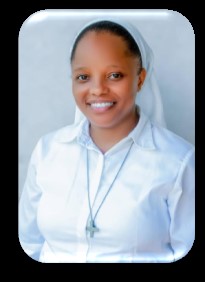
My name is Glory Beda, a Holy Union Sister of the Sacred Hearts of Jesus and Mary. From June 16th to 20th, 2025, I had the privilege of attending the SEDOS Residential Seminar in Rome. It wasn’t just a learning opportunity it became a deeply personal and spiritual experience. As someone preparing for final vows, the timing was especially meaningful. The seminar gave me space to reflect on the themes of Charism, Prophecy, and Witness in a Synodal Church and to think more clearly about how my vocation fits into the Church’s broader mission.
This was my first time at the SEDOS seminar and my first experience at an international Church gathering of this kind. I was only able to attend because of a generous scholarship, which helped cover the costs my institute couldn’t manage, as we have seven sisters currently in formation. I’m deeply grateful for that support. I arrived in Rome with an open heart and left feeling renewed in mission, connection, and spirit.
Encountering the Global Church
One of the first things that struck me was the diversity of the participants. People had come from across the world; Asia, Africa, Europe, the Americas, and Oceania. We were religious, lay collaborators, missionaries, and theologians. Even with our differences in background and language, we were united by a shared desire to reflect on the Church’s mission in today’s world.
There was a real spirit of welcome, prayer, and listening. I was touched by how genuinely people engaged with each other’s stories, including mine. Conversations during meals, coffee breaks, and small group sessions helped me see the richness of religious life lived in many different contexts. I began to feel that I belonged not just to my own institute, but to a wider missionary family, one that stretches across borders, languages, and generations.
A Keynote of Challenge and Hope
The seminar opened with a talk by Cardinal Luis Antonio Tagle. His words were both encouraging and challenging. He reminded us that Synodality isn’t just a strategy it’s at the heart of being Church. He spoke about walking together, listening deeply, and discerning in communion. One phrase stayed with me: “The Church is at its most authentic when it listens especially to the margins.” It reminded me that mission begins with listening: to the Spirit, to each other, and to the world’s cries.
Before this seminar, I’d heard the word Synodality many times, especially in formation meetings, but it always felt a bit abstract. Cardinal Tagle’s talk changed that. Synodality came alive for me not as a structure, but as a way of being. That shift shaped my experience of the entire week.
Learning by Doing: Conversation in the Spirit
One of the most powerful parts of the seminar was the method we used throughout: Conversation in the Spirit. I’d never experienced this kind of dialogue before, and it made a deep impression on me. At first, I wasn’t sure what to expect. It was very different from typical discussions. Each day began with silent reflection and prayer, followed by sharing in small groups without interruptions or debate. We listened attentively and trusted that the Spirit would speak through our shared experiences. It wasn’t easy at first, especially the silence and the discipline of listening. But as the days passed, I began to hear not just words, but hearts. I came to see Synodality as something more than Church reform it’s a spiritual practice, a way of making room for the Spirit in community life. I hope to bring this into my own community’s formation meetings.
Rediscovering Charism
We explored the theme of Charism from many angles during the week. I’ve always valued the charism of my institute, but this experience gave me a new perspective. One speaker reminded us that charisms aren’t personal property or fixed in time they are gifts meant for the wider Church and world. That challenged me. I began asking myself: Are we truly living our charism in today’s world? Are we faithful to our founder’s vision while staying open to the Spirit’s movement? These questions now guide my ongoing reflection.
Prophecy: Living the Gospel Boldly
We also looked deeply at Prophecy. One of the most powerful sessions was led by a sister working in conflict zones. Her stories of walking with displaced people and standing up for justice were deeply moving. She didn’t speak with drama or pride, but with quiet courage. She showed us that prophecy isn’t about making noise it’s about being faithful, especially in hard places. I asked myself: Am I being prophetic in my own life? Do I speak up when it’s uncomfortable? Am I truly in solidarity with the poor not just in words, but through action? These questions stay with me.
Witness: Daily Fidelity
The final theme was Witness how we live out our charism and prophetic calling day by day. Witness isn’t only about what we do it’s how we live, especially in ordinary moments. Lay collaborators shared stories of how religious had touched their lives simply by being present sharing burdens, showing up, and living joyfully. That reminded me that the most powerful witness often comes in the small things. I now ask myself: What kind of witness do I offer in daily life? Do I reflect the joy of my vocation? Are my actions rooted in the Gospel? These questions aren’t theoretical they are daily invitations to go deeper.
Lasting Impact and Moving Forward
This seminar left a deep mark on me. It wasn’t just an academic or theological event it was spiritual, relational, and life-giving. I’ve returned with a desire to share what I’ve received. I plan to introduce Conversation in the Spirit in our formation sessions and to lead a session on Synodality for my sisters. I also want to write a reflection on our charism for today’s world, to spark conversation in our community. These may seem like small steps, but I believe they matter. And above all, I now know I’m not alone. I belong to a global family walking together in mission.
Conclusion
The 2025 SEDOS Residential Seminar wasn’t just a conference it was an experience of encounter, reflection, and transformation. I arrived in Nemi with questions. I returned home with hope, clarity, and a stronger sense of belonging to the universal Church. I now understand Synodality not as a structure or idea, but as a way of living a path of listening, discernment, and shared journeying. I am truly grateful to SEDOS for the scholarship that made this possible. That generosity will bear fruit not just in my life, but, I hope, in the lives of those I will walk with and serve in the years ahead.
May the Spirit who guided us in Rome continue to lead our Church as we walk together in faith, love, and mission. During the seminar, the rhythm of daily life also contributed to the depth of the experience. Each morning began with shared prayer and Eucharist in the evening, which grounded us in our faith. The liturgies were beautifully diverse, often reflecting the cultural traditions of different participants. I remember one Mass celebrated in French language with nice music where the hymns and dance created a truly joyful worship
(Glory Beda, SUSC)
5. Walking Together - My Experience at the SEDOS Residential Seminar
From June 16 to June 20, 2025, I had the immense privilege of participating in the SEDOS Residential Seminar held at Centro Ad Gentes, Nemi, Italy. I came into the seminar with anticipation, and I left deeply transformed — spiritually renewed, theologically challenged, and communally enriched. The experience remains etched in my memory as a truly synodal encounter: a journey of walking together, listening with the heart, and embracing the diversity that reflects the very beauty of the universal Church.
The theme of this year’s seminar, “Missionary Institutes and Synodality: Charism, Prophecy, and Witness,” could not have been more relevant or timely. In the spirit of the ongoing synodal journey of the Church, the seminar invited us not merely to learn or discuss but to truly live the synodal way — through intercultural fellowship, deep prayer, reflection, and especially through “Conversation in the Spirit” (CIS), a method of discernment that permeated our group work and collective listening.
A Tapestry of Nations: Intercultural Living
The seminar brought together around seventy missionaries from thirty different missionary institutes, representing thirty-two nationalities across all continents — lay men and women, religious brothers and sisters, and priests. Sharing meals, prayers, and conversations with such a richly diverse group was a formative experience. We did not only learn about synodality — we embodied it.
Despite our different backgrounds, languages, and charisms, we formed a temporary yet powerful community of communion. This experience taught me that interculturality is not an obstacle to unity but a means by which unity is deepened. The intercultural living, we shared demonstrated, in concrete ways, the message that synodality calls us to: to walk together not by erasing difference, but by weaving it into the tapestry of shared mission. June 16th evening was day one, the seminar began with the opening address by Fr. Alain Mayama, CSSp, setting a prayerful tone for our days ahead. In the evening, Sr. Mary Barron, OLA, President of SEDOS, welcomed us warmly and formally inaugurated the seminar.
She reminded us that our gathering was not simply for intellectual engagement but was a “faithful moment” — a sacred time for discernment, listening, and response to the Holy Spirit’s invitation. Her message stirred something within me: a deeper awareness that as missionary disciples, we are not just functionaries of Church programs, but living signs and sacraments of Christ’s presence in the world.
She spoke prophetically about the urgency of this moment in Church history. Synodality, she stressed, is not a method but a way of being Church. It involves all of us — laity, clergy, and religious — in shaping a missionary Church that listens, discerns, and walks together. She challenged us to engage this journey with courage, humility, and openness to the Spirit.
The keynote address by His Eminence Cardinal Luis Antonio Tagle also gave us the thematic compass for our shared reflection.
Synodality: A Way of Being, Not Just a Process
One of the most insightful themes throughout the seminar was the understanding of synodality not as an event or a structural reform, but as an ecclesial spirituality — a new way of being Church that is relational, participatory, and Spirit-led.
Cardinal Tagle helped us explored Biblical foundations, especially the prophet Micah’s words: “What does the Lord require of you? To act justly, to love mercy, and to walk humbly with your God” (Micah 6:8). This humble walking with God became for us a symbol of synodality. Whoever walks humbly with God will also walk humbly with others.
He guided us in reflecting on freedom as essential to the synodal path. Without freedom — the kind rooted in spiritual maturity and openness to others — we cannot genuinely choose to walk together. Moreover, cultural intelligence emerged as a vital synodal skill: to be at home in one’s culture, yet fully open to welcoming the culture of others.
One facilitator beautifully described synodality as “a reimagining of mission”— a shift from a Church that sends to a Church that goes forth in communion; a Church that welcomes as much as it evangelizes.
Charism: A Shared Gift to Be Renewed
We spent significant time reflecting on charism — not only the founding charisms of our Institutes but also the personal charisms of individual members. Each person is unique, and our Institutes thrive not in uniformity but in diversity. A synodal Church, we learned, is one that integrates and uplifts all gifts.
I found this aspect particularly enlightening. Often, in community life, individual charisms are subdued under the banner of “community cohesion.” But synodality invites us to do the opposite: to recognize that our Institutes grow because of the creative, Spirit-given contributions of each member. As one speaker said, “The Charism belongs to everyone — it is lived by consecrated men and women, and by lay people in different forms.”
This calls for humility, collaboration, and deep listening. We were reminded that we cannot understand or rejuvenate our charism unless we listen attentively to the needs of the times and the cries of our people.
Prophecy: A Missionary’s Bold Call
“Are missionaries today sufficiently prophetic?” This was one of the most probing questions we reflected on during the Conversation in the Spirit. It made us pause and ask: what does it mean to be a prophet today?
A prophet is not merely one who predicts the future. Rather, a prophet is one who reads the signs of the times in light of the Gospel and speaks the truth with courage — even when it is unpopular or dangerous. In today’s world of war, injustice, environmental degradation, and spiritual confusion, being prophetic means being counter-cultural and grounded in Christ. Using the words of the facilitator who quotes “A prophet is someone who speaks forth” Stephen Bevans, SVD and “a prophet is one who sees the world with the eyes of God.” Joshua Heschel.
Mission, we were reminded, belongs to God. We are not the owners of the mission; we are participants in God's ongoing redemptive work. By our baptism, we are all missionaries and prophets. As missionary institutes, our challenge is to resist institutional complacency and allow ourselves to be disturbed by the Spirit into prophetic action.
Witness: Evangelizing Through Presence and Relationship
Witness is often the most powerful form of evangelization. One facilitator said something that deeply resonated with me: “We become witnesses and prophets not only through preaching but through our presence — especially among the poor, the marginalized, and people of other faiths.”
Human relationships, built on respect, listening, and mutual transformation, are central to mission. In our interreligious and intercultural world, being a witness often means being present — with love, without judgment, and with a genuine desire to listen. Through presence, we proclaim Christ in silence and service.
The seminar emphasized that evangelization should be about communion, accompaniment, and witness through our shared vulnerability and mutual learning. Together in mission with the universal Church, we are called to be signs of unity, healing, and peace.
Conversation in the Spirit: A Sacred Process of Discernment
Perhaps the most powerful methodology we practiced was the “Conversation in the Spirit” (CIS). In small groups, we followed a three-round sharing process designed to help us listen not only to others but to the voice of the Spirit speaking through others.
Each round called for prayerful silence, deep listening, and heartfelt sharing. This method helped us move beyond debate or problem-solving into genuine spiritual discernment. We learned to speak from the heart and to listen with the heart — allowing the Spirit to guide us toward communal insight.
The CIS process showed me the power of communal discernment. It was not always easy, but it bore fruit. I left each session feeling heard, respected, and spiritually energized. It is a practice I hope to bring back to my own community.
A Prophetic Communal Statement
At the conclusion of our seminar, a group was assigned to come up with a statement which I now own because I was a participant in this seminar and in summary it is as follows: we issued a joint statement — a prophetic call to the Church and the world. We acknowledged the global crises of war, violence, environmental degradation, and the cry of the poor. As missionary men and women, we affirmed our commitment to become witnesses of hope, channels of peace, and instruments of justice.
We echoed Pope Leo XIV’s plea: “Let everything possible be done to achieve genuine, just and lasting peace as soon as possible.” We were challenged not only to pray for peace but to become agents of peace — within our communities, our ministries, and the world.
A Final Reflection: Becoming Pilgrims of Hope
Looking back, the SEDOS Residential Seminar was not simply an academic exercise or a conference. It was a pilgrimage — a spiritual journey into the heart of the Church, into the heart of mission, and into the heart of God. I return to my community with renewed passion, a clearer sense of my call, and a deeper appreciation of the richness of the Church. I am convinced that the future of mission lies in the path of synodality — where all voices are heard. It was truly a time for interconnectedness and encounter. May the Good Lord bless all the organizers of SEDOS and all who made this experience enriching, enlightening, encouraging, challenging and spirit filled for us.
(Josephine Tansho Sikem, SUSC)
1. Cf. Sr. Mary Barron’s introductory presentation at SEDOS 16-20/06/2025.
2. Cf. Ibidem
3. D. SENIOR – C. STUHLMUELLER, The Biblical Foundations for Mission, Orbis Books, New York, 1983, 334.
4. D. SENIOR – C. STUHLMUELLER, The Biblical Foundations for Mission, Orbis Books, New York, 1983, 335.
5. Cf. Sr. Maria Nirmalini’s presentation, 19/06/2025.
6. M.B. Billones, The Ecclesiological Principle of Synodality in Eugenio Corecco, 190-191.
7. A. Melloni – S. Scatena, ed., Synod and Synodality: Theology, History, Canon Law and Ecumenism in New Contact: International Colloquium Bruges 2003, 001, 2.
8. N. Becquart – P.G. Renczes, ed., Theology Responding to the Challenge of Synodality: Proceedings of International Conference held at the Pontifical Gregorian University, Rome, 27-29 April 2023 = La teologia alla prova della sinodalità: atti della Conferenza internazionale tenuta alla Pontificia Università Gregoriana, Roma, 27-29 aprile 2023, iv-v.
9. R. Luciani, Synodality: A New Way of Proceeding in the Church, 45-47.
10. R. Luciani, Synodality: A New Way of Proceeding in the Church, 53.