Mary T Barron, OLA From Ad Gentes to Inter Gentes
Dear sisters and brothers in Christ,
Welcome to this year’s SEDOS Autumn Seminar, where we gather under the theme: From Ad Gentes to Inter Gentes. This is not merely a linguistic shift—it is a theological and pastoral reorientation that invites us to reflect deeply on the nature of mission in our time.
The term mission inter gentes is not new. It was first proposed in 2001 by William R. Burrows, in his response to Michael Amaladoss’ presentation at the 56th Annual Convention of the Catholic Theological Society of America. Since then, it has gained traction—especially through the theological reflections of the Federation of Asian Bishops’ Conferences (FABC), whose contextual experience of religious pluralism, minority Christianity, and interfaith dialogue has placed Asia at the forefront of this missiological development.
This year also marks a significant milestone: the 60th anniversary of the Second Vatican Council’s decree Ad Gentes. While the document bears the name “to the nations,” its vision already carried the seeds of what we now call inter gentes. Ad Gentes called for a Church that is incarnational, dialogical, and rooted in the life of the people. It emphasized the importance of local churches, cultural adaptation, and the witness of life. In many ways, inter gentes is the unfolding of that vision—mission not as a one-way proclamation, but as a shared journey of communion and mutual transformation.
The development of mission inter gentes has been enriched by the contributions of several key missiologists. In addition to William R. Burrows and Michael Amaladoss, scholars such as Jonathan Y. Tan, Stephen Bevans, and Roger Schroeder have helped articulate this paradigm through the lens of contextual theology, intercultural dialogue, and prophetic witness. Their work affirms that mission today is not about exporting a system, but about embodying the Gospel in diverse cultures and walking humbly with others in mutual respect and hope.
We are especially blessed today to welcome three distinguished contributors who will help us deepen our reflection. Dr. Paolo Trianni will offer a philosophical and theological lens on the evolution of mission thinking, helping us trace the spiritual and intellectual currents that shape inter gentes. Msgr. Fortunatus Nwachukwu, drawing from his rich experience in diplomacy and global Church service, will challenge us to consider mission as a bridge of peace and encounter across cultures and institutions. And Sr. Gloria Liliana Echeverria Franco, with her deep commitment to religious life and synodal renewal, will invite us to see how inter gentes calls for a transformation in how we live, govern, and witness as consecrated persons. Their voices will guide us, provoke us, and inspire us.
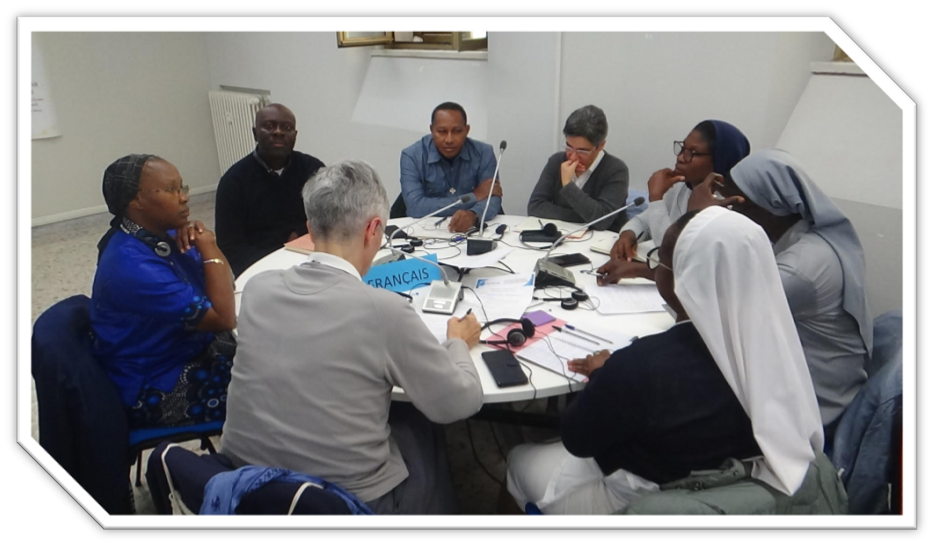
Mission inter gentes invites us to move beyond a paradigm of proclamation to the nations toward a spirituality of presence among the peoples. It is mission not as conquest, but as communion. Not as strategy, but as solidarity. Not as superiority, but as humble witness.
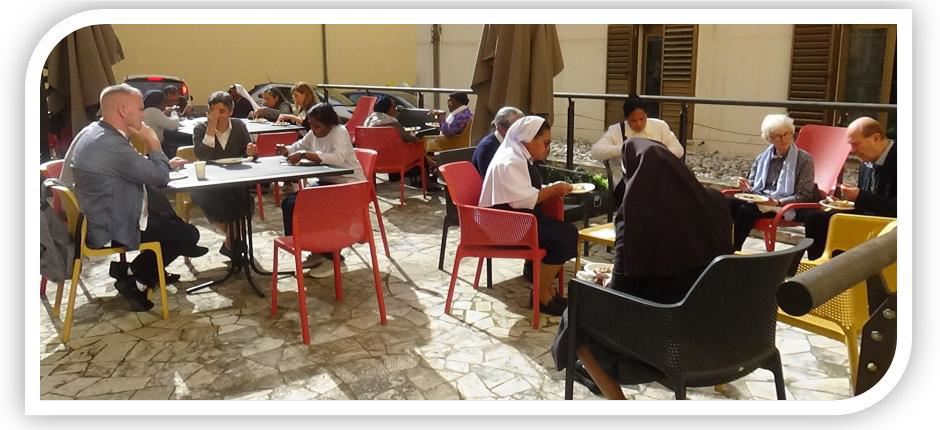
This shift resonates deeply with the Church’s synodal journey and with Pope Francis’ call to be a Church that goes forth—one that listens, accompanies, and welcomes. It challenges us to be missionary disciples who are not afraid to dwell among those who are different from us, even those whom we might be tempted to judge or exclude. It reminds us that the Spirit of Christ is already at work in every culture, every heart, every story.
Today’s seminar is a space of discernment. We will hear from theologians, practitioners, and witnesses who are living this shift. We will explore its biblical, theological, and pastoral dimensions. And we will ask: What does inter gentes mean for our congregations, our formation, our presence in the world?
May this day be marked by openness, courage, and joy. May we leave not only informed, but transformed—ready to walk humbly among the peoples, bearing the Spirit of Christ in every encounter.
Welcome to this sacred conversation.