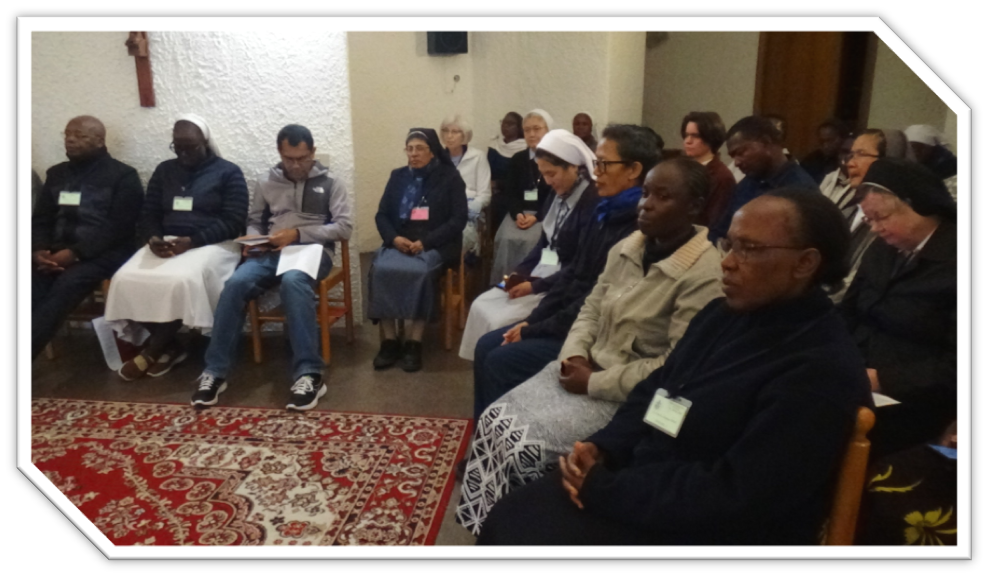
Final Synthesis: SEDOS Residential Seminar 2026
This report summarizes the collective discernment of the four English-speaking groups over three days of prayerful reflection on the missionary call to the “New Poor.â€
I. The Foundation: Mission as Incarnation and Presence
Mission is not a project we manage, but a continuation of the Incarnation — God’s unconditional love descending into the “messiness†of human vulnerability.
Concrete Incarnation: To choose the “Option for the Poor†is to see God concretely in the world. We are called to love in such a way that people do not just hear about God, but feel His presence.
The Unknown Face of God: We are called to embrace a “culture of encounter.†In the face of the poor, we see the “unknown face of God.†This realization shifts our focus from people's conditions to the person themselves.
The “We†of Mission: Mission is a boundary-breaking relationship where the distinction between “I†and “you†dissolves into a shared “we.†We are not just “doing for†the poor; we are “being with†them and “receiving from†them.
II. The Interior Life: Prayer, Faith, and Vulnerability
The groups recognized that impactful ministry is the fruit of a deep interior life and an honest appraisal of our own limitations.
Presence in Prayer: Ministry with the poor must emerge from a deep presence of God in prayer. Without this spiritual grounding, we cannot sustain the passion and joy required for mission.
Embracing Vulnerability: We recognize that we, too, are the poor. By acknowledging our own vulnerabilities and living our vow of poverty authentically, we are better able to enter into the suffering of others.
Faith and Trust: Deeper mission requires deeper faith. We are called to trust God’s providence in the “searchingâ€â€”even when we are still looking for concrete steps and strategies.
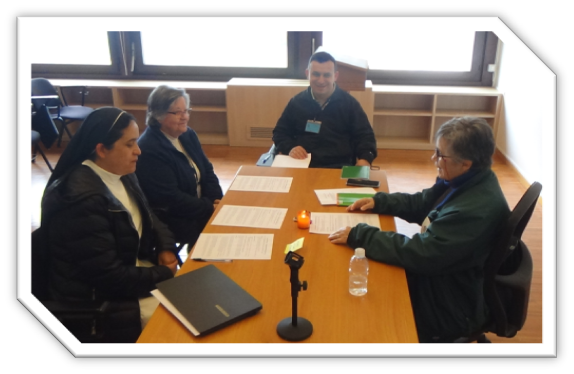
III. The Method: Listening, Solidarity, and Continuity
How we engage is as important as what we do. The groups highlighted the need for systemic and relational changes.
Active Listening: To overcome prejudices and be transformed, we must practice “deep listening.†This allows us to recognize the poor not as recipients of charity, but as teachers and a source of hope.
Root Causes and Independence: While responding to immediate needs (material, spiritual, and moral), we must work to help the poor become independent by addressing root causes and educating for long-term dignity.
Solidarity as Continuity: Working in solidarity with others—lay people, other congregations, and the poor themselves—is the only way to ensure the continuity of the Missio Dei.
Congregational Responsibility: While not every individual may work directly on the “front lines,†the entire Congregation must be open to the Spirit. We must create institutional support and opportunities that allow members to discover and respond to “new poverties†around us.
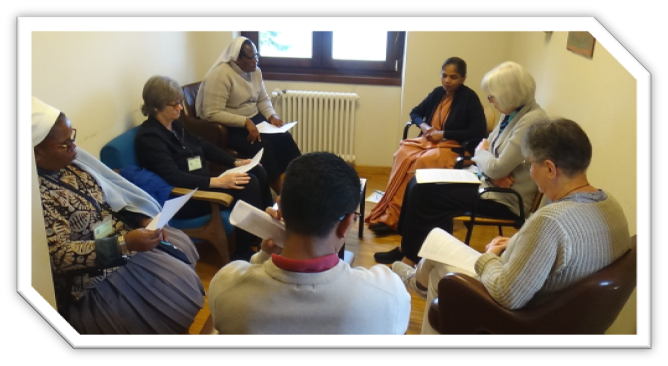
IV. Mission as a “Give and Take†Journey
Ultimately, there is no salvation without acts of service. The Eucharist remains our center. The poor have a right to the Word of God and the Bread of Life. As we bring the poor to the Eucharist, we bring our shared humanity to the altar.
Summary of the Missionary Shift
From..
Service Provider
Spiritual Abstraction
One-way Charity
Seeing Conditions
Isolated Effort
To...
Missionary of Love/Encounter
Involvement in “Real Messinessâ€
Mutual Transformation (Give and Take)
Seeing the Face of God
Solidarity and Shared Continuity
Therefore, Mission is beyond working or giving; it is about encountering Christ in the other. We return to our ministries with a renewed call to share our lived experiences with passion, joy, and a deeper trust in the God who first loved us.
Consolidated Insights from the French Working Groups
Theme: Missionary Credibility and the “Option for the Poorâ€
The French-speaking groups focused on the essential “truth†of the missionary life, posing challenging questions about our internal community health and the authenticity of our presence among the people.
1. Brotherhood: The First Frontier of Mission
Following the example of Saint Francis of Assisi, the groups emphasized that mission begins at home.
Intra-Community Witness: We are called to be sisters and brothers within our own communities first. This is our primary missionary site.
A Vital Question: The groups posed a provocative challenge: “Is Love truly loved within our own communities?†If we do not live in love with one another, our outward mission lacks a foundation.
2. A Mission of Presence and Solidarity
Mission is defined more by “being†than by “doing.â€
Loving Simplicity: We are called to be missionaries through our presence—a presence marked by love, simplicity, and total solidarity.
Walking With, Not Solving For: The focus of mission should not be merely on “problem-solving,†but on the act of walking alongside the people. Our presence is the message.
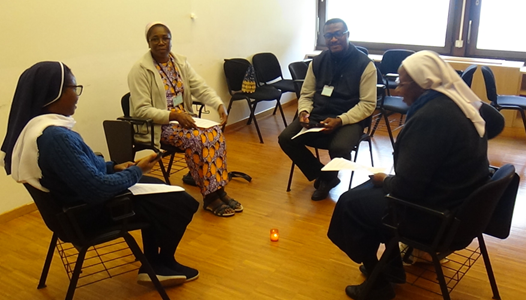
3. The Call to Credibility
To be credible in the face of the “cry of the poor,†the Church must look at its own lifestyle and motivations.
Authentic Accompaniment: Credibility is earned through deep listening, proximity, and real fraternity.
Empowerment: We proclaim the Good News to the poor so that they may recognize their own dignity and, in turn, become evangelizers themselves.
4. Challenging the “Money-Mission†Paradigm
The groups presented a strong “interpellation†(a spiritual summons) regarding our dependence on resources:
Disciples vs. Managers: We must reject the slogan “No money, no mission.†This mind-set forces us to ask: Are we truly disciples of Christ, or just managers of an organization?
Christ at the Center: We must constantly discern whether we are announcing Christ or merely promoting ourselves and our own structures.
5. The Courage of Concrete Choice
The “Option for the Poor†must move from a theological concept to a lived reality.
The Poor as a Sacred Space: The groups affirmed that the poor are the primary “place†of mission and the dwelling place of God.
A Call to Truth: Do we have the courage to choose the poor as God does? This choice must be reflected in our concrete attitudes, the location of our missions, and our personal proximity to those on the margins.
Summary of the French Groups’ Discernment
| Focus Area | Missionary Shift |
|---|---|
| Community | From “work-focused†to a “fraternity-first†mission. |
| Approach | From “resolving problems†to “walking with the people.†|
| Resources | From “funding-dependent†to “spirit-driven†mission. |
| Objective | From “serving the poor†to “evangelizing alongside the poor.†|
“Do we have the courage to choose the poor concretely—through our attitudes, our missions, and our proximity? This question demands that we face the truth within ourselves.â€
Consolidated Insights from the Spanish Working Groups
Theme: Vulnerability, Hope, and the Empowerment of the Poor
The reflections from the Spanish-speaking groups centered on a profound conversion of our missionary identity, moving away from “triumphalism†toward a humble, shared presence in “the same boat.â€
1. A Vulnerable Church vs. Triumphalism
The groups emphasized the need for deep spiritual honesty regarding our condition as a Church.
Overcoming Messianism: We must accept ourselves as a vulnerable Church and overcome the temptation of triumphalism or “messianic†attitudes that disconnect us from the reality of those most in need.
Avoiding Manipulation: A warning was issued against the temptation of taking pride in being “among the poor†for our own spiritual benefit or well-being. The goal is not to use the poor for our own merit, but to ensure they live in dignified conditions.
2. The Poor as Sacrament and Protagonist
Mission is not something we “do for†the poor, but something we “receive from†them.
The Poor as Sacrament: We need the grace to recognize the real presence of Jesus in the needy; the poor are a living sacrament of our encounter with God.
Listening and Agency: There is an urgent need to listen to the poor and let them speak to us. They are not objects of our charity, but the true protagonists of evangelization.
3. Hope in the Face of Impotence: “In the Same Boatâ€
Acknowledging the harsh reality that poverty often results in “early death,†the groups reflected on the meaning of missionary presence amidst suffering.
Signs of Hope: While we feel frustration and impotence at being unable to stop the structural causes of poverty, there remains a deep desire to be present where the poor are—to be signs of hope in their midst.
Rowing Together: Inspired by Pope Francis’ reflection on the storm (Mk 4:35), the groups reaffirmed that “no one is saved alone.†In a world darkened by vulnerability and silence, we realize we are all in the same boat—fragile and disoriented, yet important and necessary to one another.
Networking and Solidarity: The seminar concludes with a commitment to find ways to work with others. We cannot continue on our own; we must move forward together.
Summary of Missionary Shifts
| From... | Toward... |
|---|---|
| Disconnected Messianism | A humble and vulnerable Church |
| The poor as recipients | The poor as protagonists and teachers |
| Pastoral Triumphalism | The poor as the “Sacrament of Jesus†|
| Isolated efforts | Synodality:“Rowing together in the same boat†|
Mission calls us to dwell in the reality of the other, recognizing that we are all fragile and in need of mutual comfort. The challenge is to move from assistance-based aid to a presence that restores dignity and hears the voice of God in the cry of the poor.