Editorial Mission as Dependence on God and Solidarity with the Marginalized
Dear Members and Readers,
Welcome to this edition of the SEDOS Bulletin, which gathers the remaining contributions and reflections from our Residential Seminar held from 4 to 8 May 2026 at Centro Ad Gentes in Nemi. Our theme—"Mission as Dependence on God and Solidarity with the Marginalized”—serves as a perceptive compass for the Church’s calling today. Venturing to the margins is a profound theological choice rooted in the identity of Jesus Christ. Authentic mission begins when we empty ourselves of self-reliance, acknowledge our dependence on God’s grace, and allow that trust to propel us into relational solidarity with those on the peripheries.
In our current era, human poverty has multiplied in complex ways. Beyond economic deprivation, contemporary poverty encompasses severe isolation, displacement, structural injustice, and an existential loss of meaning. Addressing these challenges demands a conversion of heart—shifting from static administration to a dynamic missionary communion marked by radical accompaniment, active presence, and genuine brotherhood.
This edition opens with a foundational article by Fr. Dinh Anh Nhue Nguyen, OFM, titled "Franciscan Response to the Cry of the New Poor." Drawing on the witness of St. Francis of Assisi and Papal World Mission Sunday Messages from 2022 to 2026, Anh Nhue proposes a renewed paradigm. St. Francis encountered Christ in the tangible embrace of outcasts. Prioritizing relational proximity over institutional security, the Franciscan charism offers a transformative model for modern evangelization, approaching the “new poor” as privileged places of encounter with Christ.
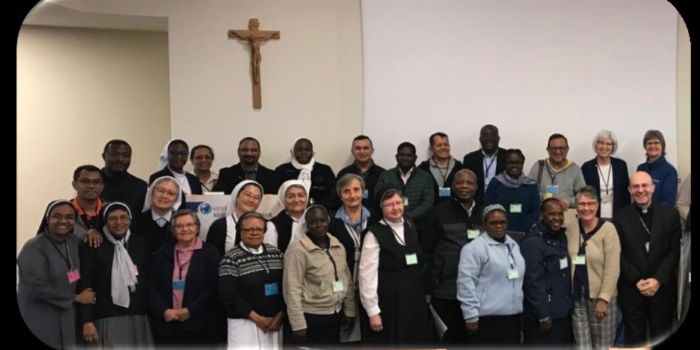
Extending these insights, three participant reflections offer personal and contextual resonance with the Seminar’s primary theme. Sr. Kunsah Elizabeth, SUSC, in her reflection titled "A New Way of Encountering Christ Through the Poor," explores the deeper theological implications of the Incarnation and Franciscan fraternity. She emphasizes that encountering Christ in those suffering from spiritual emptiness, displacement, and loneliness demands a transition from transactional charity to transformative solidarity. Sr. Kunsah stresses that authentic mission requires walking side-by-side with the marginalized, actively addressing systemic structures that perpetuate injustice, and living as a united, prayerful community whose shared life presents a credible witness to the Gospel.
Moving from theological reflection to practical pastoral application, Sr. Eugenia Mshana, SUSC, shares her experience in “Renewed in Mission.” Deeply touched by the Seminar’s emphasis on synodality and pastoral challenges worldwide, Sr. Eugenia highlights how these insights directly enriched her apostolic commitment in Tanzania. Empowered by a deepened theology of the poor, she articulates a clear vision for strengthening anti-trafficking networks, expanding safe houses, and enhancing community outreach programs. Her testimony shows that missionary theology reaches its full significance when implemented in local contexts—ensuring that mission is precisely the place where divine love becomes visible to the most vulnerable.
In a similar spirit of courageous commitment, Sr. Ngwa Norah Neh, SUSC, expresses her thoughts in "My Experience at the SEDOS Residential Seminar." Drawing from her work in traumatized and war-impacted communities, Sr. Ngwa addresses the serious emotional and spiritual dimensions of modern suffering. Inspired by the Seminar’s speakers and shared testimonies, she calls for a courageous ministry of presence that dares to step beyond comfortable structural boundaries and personal fear. She reminds us that to serve Christ in broken contexts, missionaries must share in the reality of those who suffer, offering hope through steady, compassionate, and enduring companionship.
Fr. Thomas Aquino N. Wele, SVD, further deepens our understanding of missionary identity in his synthesis titled “Walking with the Marginalized.” He reiterates that true mission can never be empowered by human effort alone, but must spring from total daily dependence on God. Drawing from a strong missionary formation, Thomas Aquino underscores that walking with those on society's peripheries requires profound humility, continuous conversion, and lived witness. When missionaries humble themselves to accompany others without paternalism, they become true instruments of Christ's healing love, demonstrating that solidarity is both a path of discipleship and a sign of God's Kingdom.
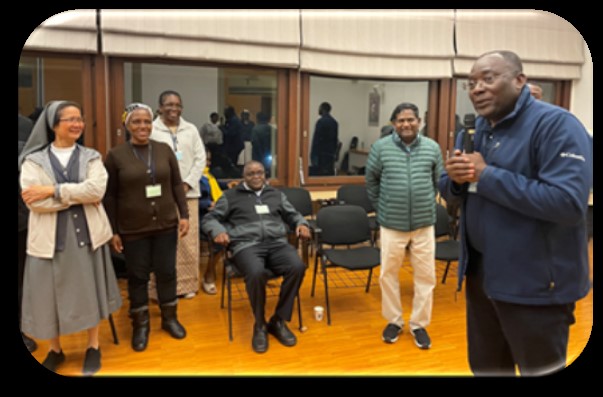
Finally, this issue includes the official evaluation and synthesis report of the seminar. Participants renewed their commitment to view the poor as evangelizers and active protagonists rather than passive recipients of charity, emphasizing communal discernment, networking, and psycho-spiritual support to address emerging forms of poverty.
As you read the articles and testimonies collected in this issue, our hope is that you will find rich theological nourishment and practical encouragement for your own life and ministry. May these reflections inspire us across the SEDOS network to cast off self-reliance, deepen our trust in God, and rediscover the joy of walking alongside our brothers and sisters on the margins.
Dr. John Paul Herman, SVD
Director of SEDOS