Beyond Assistance : Mission as Reciprocal Presence and Solidarity
Dear Members and Readers,
I am delighted to present this edition of the SEDOS Bulletin, which captures the rich theological fruits and pastoral insights of our recently concluded SEDOS Residential Seminar 2026.
The theme of the seminar, “Mission as Dependency on God and Solidarity with the Marginalized,†invites us to rediscover the spiritual heart of our apostolate. Mission is never merely a series of strategic projects or structural initiatives; rather, it is a radical act of trust—a profound acknowledgement of our fundamental dependency on God’s grace.
From this posture of humility, we are called into authentic solidarity with those at the peripheries. By shifting our focus from “doing for†to “being with,†we align our ministry with the Gospel’s preferential option for the poor, discovering how surrendering our self-sufficiency empowers us to become true witnesses of hope and justice.
The Bulletin opens with the Welcome Address by SEDOS President, Fr. Alain Mayama, CSSp. Framing mission not as a self-generated enterprise but as a direct participation in the missio Dei, Fr. Mayama introduces the vital concept of hospitÄlitÄs — a mutual, transformative welcome where the missionary becomes both guest and host. By embracing docility, reliability, and fidelity, missionaries are challenged to move beyond paternalistic assistance to a deeply shared life with the vulnerable, ensuring evangelization remains inseparable from social justice and Trinitarian love.
Next, we feature the Keynote Address by Archbishop Samuele Sangalli, titled “Missione come Dipendenza da Dio e Solidarietà con gli Emarginati.†Grounding his reflection in the theology of the Council of Nicaea and recent magisterial teachings — notably Pope Leo XIV’s Encyclical Dilexi te — he explores mission as a reflection of God’s own kenosis (self-emptying). From this theological framework, Archbishop Sangalli outlines three urgent missionary priorities for our time:
Quality Formation: Strengthening seminaries in vibrant but resource-poor young Churches.
Economic Stewardship: Moving toward financial self-sustainability and the responsible management of ecclesiastical goods.
Conflict Resilience: Providing robust psycho-spiritual support for pastoral workers enduring trauma in war-torn region
In the third article, Sr. Lieve Stragier, ICM, provides a practical and spiritual roadmap in “Conversation in the Spirit.†This structured, prayerful discernment process fosters collective decision-making through successive, timed rounds of personal reflection, empathetic listening, and communal dialogue, offering a vital methodology for synodal governance.
Fr. Edgardo A. Guzman, CMF, follows with a profound theological analysis titled, “God Chooses the Poor.†Looking through a Latin American lens and drawing insights from Dilexi te alongside liberation theologians Gustavo Gutiérrez and Jon Sobrino, Fr. Guzman argues that opting for the poor is not a political or sociological stance, but a deeply theological response to a God who reveals Himself by sharing in human vulnerability.
Christ fully embodied this by establishing His “chair of redemption†among the marginalized. Grounded in both early Christian practice and modern ministries with the homeless in Rome, this text challenges the Church to reject the mere “spiritualization†of poverty and allow itself to be evangelized by the vulnerable.
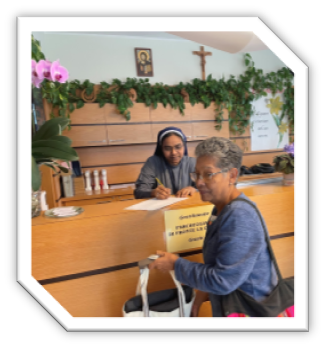
Moving into concrete pastoral realities, Sr. Anicette Lantonkpôde details her harrowing yet deeply hopeful missionary work in Genoa, Italy, in “Ministère des Migrants et de la Prostitution.†Accompanying migrant women and trafficking victims forced into prostitution, her ministry restores human dignity through material aid, legal advocacy, language training, and consistent pastoral presence, proving that social liberation is born of radical trust in God.
In “JPIC Mission and the Church of the Poor,†Fr. Vincent Anesthasiar highlights his journey with the JPIC Commission in India. Utilizing the classic “See-Judge-Act†methodology, his ministry confronts severe societal issues—from female infanticide to mental health neglect and environmental injustice. Guided by the Gospels and Dilexit Nos, he advocates for a missionary rhythm that beautifully balances contemplative prayer with prophetic, structural action.
Sr. Paola Vizzoto brings us inside the walls of Rome's correctional system in “Ministero Carcerario Missione a Rebibbia Femminile.†Exposing how prison overcrowding and systemic neglect cause correctional facilities to function as a “social dumping ground†rather than a space for rehabilitation, Sr. Vizzoto calls for a “Church that enters.†Her ministry at Rebibbia Femminile champions active, non-judgmental listening and an unyielding commitment to restorative justice.
We then present The SEDOS 2026 Consolidated Report, which beautifully synthesizes the reflections of our multilingual language groups, all pointing toward a unified shift regarding the “New Poorâ€:
The English groups focus on mission as an incarnational, prayer-grounded mutual encounter.
The French groups emphasize intra-community fraternity, humble presence, and a healthy rejection of resource-dependence.
The Spanish groups advocate for a vulnerable, decentralized Church that recognizes the poor as the true protagonists of mission.
The Bulletin concludes with two closing reflections from our President, Fr. Alain Mayama, CSSp. In his Synthesis of the Seminar, he reinforces the call to hospitÄlitÄs and a boundary-breaking reciprocity where the poor become our teachers. Finally, in his Closing Address (Mot de clôture), Fr. Mayama reminds us that because God originates and sustains all mission, the Church must remain in total dependence on Him. He notes that the “Church of the poor†is not an abstract concept but a living, often anonymous reality that demands solid psycho-spiritual formation, collaborative networking, and deep contemplative prayer to sustain humble service amid structural suffering.
I am sure that these articles will enlighten you, deepen your insights, and inspire you to live out a mission where we walk not simply for the poor, but as the poor among the poor.
Dr. John Paul Herman, SVD
Director of SEDOS