A New Way of Encountering Christ Through the Poor in our Everyday Life
The SEDOS Residential Programme 2026 was a kairos moment, filled with joy, laughter, peace, shared experiences, new learnings and personal growth. As a Holy Union Sister living and working in Cameroon, serving as part of the Area Leadership Team, I had the opportunity to participate in this seminar held at the beautiful retreat centre in Nemi, Rome.
The theme of the programme, “Mission as Dependence on God and Solidarity with the Marginalized,” offered deep and meaningful insights that have since shaped my understanding of mission, poverty, and the encounter with invisible face of Christ in the everyday life. The various presentations helped me to better understand who the “new poor” are in today’s world and what it means to walk with them.
Who Are the New Poor?
Drawing inspiration from the Franciscan tradition and linking to the 40th anniversary of the World Day of Peace, Father Dinh Annh Nhue N, the Secretary General of the Pontifical Missionary Union, nourished us with, The Franciscan Response to the Cry of the “New Poor”. This tradition offers a deeply human and evangelical response to the cry of the “new poor” in our contemporary world. Inspired by the life of Saint Francis of Assisi, Franciscan spirituality invites missionaries to embrace simplicity, proximity, fraternity, and minority, choosing to walk alongside those who suffer rather than above them. Saint Francis understood poverty not merely as deprivation, but as a privileged place of encounter with Christ. His famous conviction, “What a man is before God, that he is and nothing more,” reminds us that true dignity is not rooted in status, wealth, or power, but in Our Identity as beloved children of God.
The Franciscan response to the poor is therefore not paternalistic charity, but relational solidarity. It seeks to restore human dignity through presence, listening, compassion, and shared humanity. In a world marked by exclusion, loneliness, migration, ecological destruction, and spiritual emptiness, the Franciscan charism calls us to become instruments of peace and reconciliation. As Saint Francis prayed, “Lord, make me an instrument of your peace,” missionaries today are invited to bring healing where there is division, hope where there is despair, and fraternity where there is indifference. This response challenges the Church to become ever more humble, welcoming, and attentive to the cry of both the poor and the Earth, recognising in them the suffering face of Christ Himself.
Today, poverty goes far beyond the lack of material resources. The “new poor” include those who are socially excluded, migrants and refugees, victims of war and violence, the unemployed, and those living in precarious and fragile conditions. They also encompass the lonely, the elderly who are abandoned, young people without direction or hope, and those suffering from deep emotional and psychological wounds.
In many contexts, we also encounter people who are digitally and spiritually poor, those who feel disconnected from God, searching for meaning, truth, and belonging in a rapidly changing world. This form of poverty is perhaps the most hidden, yet it is profoundly real and increasingly widespread.
The new poor are often hidden in our everyday environments: in our neighbourhoods, workplaces, families, communities, and even within our own institutions. They may not always ask for help, yet their silent suffering calls for attention, compassion, and presence. They challenge us to move beyond superficial encounters and to build genuine relationships rooted in dignity and respect.
The Incarnation as Our Missionary Lens
The spirituality of the Incarnation calls us to bring Christ to others and more profoundly, to recognise Him in the face of every person we encounter, especially in the most vulnerable. This double movement, giving and receiving Christ, is at the heart of our missionary identity as Holy Union Sisters.
This spirituality requires us to listen attentively, to approach others with openness and humility, and to offer them the loving presence of Christ through our words and actions. It demands that we resist the temptation of distance, the distance of comfort, of busyness, of institutional routine and instead allow ourselves to be touched by the reality of those who suffer.
“One in Christ and United in Mission”
This missionary vision resonates profoundly with Pope Leo XIV message on the World mission Sunday 2026 on “One in Christ and United in Mission.” The Holy Father emphasises that authentic mission is born from communion with Christ and strengthened through unity among God’s people. In a fragmented and wounded world, the Church is called to witness to a spirituality of encounter, collaboration, and shared responsibility. He reminds missionaries that evangelisation is never an individual task but a collective journey rooted in love, humility, and mutual belonging in the Body of Christ.
His message challenges consecrated men and women to move beyond borders of culture, language, and personal comfort in order to build bridges of solidarity and hope. Unity in Christ becomes the source of missionary courage, enabling the Church to respond more effectively to the cries of the poor, the displaced, the forgotten, and the spiritually searching. To be “one in Christ” is therefore not simply a theological idea; it is a lived commitment to walk together in service of humanity, witnessing to the Gospel through compassion, justice, and fraternity. In this way, mission becomes both a proclamation of faith and a concrete expression of God’s inclusive love for all people.
Encountering Christ in the poor also demands that we become more aware of the structures and systems that create inequality and exclusion. It calls us to solidarity not merely acts of charity, but a genuine commitment to justice, advocacy, and systemic transformation. As missionaries, we are invited to walk with the poor, to share in their struggles, and to be signs of hope in situations of despair.
The proclamation of Christ should always accompany every activity we undertake, ensuring that our mission remains rooted in faith and love. In this way, our daily encounters become sacred moments where Christ is both given and received. This was drawn from the deep inspiration of the four invited guests who shared experiences in the prison ministry; Sr. Paola Vizzotto, PIME, Street children ministry; Fr Massimo Vedova, FMC, JIPIC ministry and Migrant and prostitution ministry; Sr. Anicette Lantonkpode.
A Renewed Missionary Praxis: The Message of Fr. Alain
A particularly enriching dimension of the programme was the synthesis offered by Fr Alain, President of SEDOS, in his closing reflections. Drawing together the themes of hospitalitās, the papal documents Dilexit Nos and Dilexi Te, and the richness of the Franciscan tradition, Fr Alain offered a compelling and integrated vision for contemporary mission.
At the heart of this synthesis is a powerful insight: Dependence on God is not passivity, but participation in Divine Love. To depend on God is to be drawn into the very movement of love that flows from the Heart of Christ, a love that is always outward, always incarnate, always on the side of the poor and the forgotten. The convergence of these theological and spiritual traditions calls the Church, and each missionary, to a renewed way of being and acting in the world.
Fr Alain's synthesis articulated four principal orientations for this renewed missionary praxis:
A Spirituality that moves from contemplation to action. Mission is not reducible to programmes and projects. It flows from an interior life nourished by prayer and attentiveness to God. The Franciscan tradition, in particular, reminds us that true mission is born in the silence of contemplation and expressed in the tenderness of action. Missionaries who do not pray become agents of activism; missionaries who pray become instruments of transformation.
A Church that prioritises the poor and marginalised. Drawing on the spirit of hospitalitās, the ancient practice of welcoming the stranger as a sacred encounter and the encyclical Dilexit Nos, Fr Alain reminded us that the option for the poor is not optional. It is constitutive of the Gospel. A Church that is comfortable cannot truly proclaim a Christ who was born in poverty, lived among the marginalised, and died in solidarity with the condemned.
A communal approach to mission rooted in shared responsibility. Mission is never the work of isolated individuals. It is always ecclesial, always relational, always carried forward in community. The SEDOS programme itself was a living expression of this principle, bringing together missionaries from across the globe, from different congregations and cultures, to discern together what the Spirit is asking of the Church today. Shared responsibility demands that we move beyond the silos of congregational life into genuine collaboration, co-discernment, and mutual accountability.
A prophetic witness against structures of injustice. Solidarity with the poor cannot remain at the level of personal charity. It must include the courage to name, challenge, and work to dismantle the systems that produce poverty, exclusion, and dehumanisation. In the spirit of Dilexi Te and the Franciscan commitment to minority and marginality, Fr Alain called missionaries to a prophetic stance, to stand where the poor stand, to speak what the poor cannot say, and to embody in our lives the alternative that the Kingdom of God proposes.
Conclusion: Sacred Encounters in Everyday Life
The SEDOS Residential Programme 2026 invited each participant to see everyday life with new eyes, eyes shaped by the Incarnation, the Heart of Christ, and the tradition of those who have gone before us in faith. The “new poor” are not abstractions. They are present in our parishes, our schools, our streets, our families and our communities. They are present, perhaps, within our own hearts.
As Sisters of the Holy Union, as consecrated men and women, we are called to bring the healing and liberating love of Christ to the wounded and excluded. But we are equally called to receive that love from those very same people, to allow them to evangelise us, to challenge our comfort, and to deepen our faith. In this mutual giving and receiving, every encounter becomes holy. Every ordinary moment carries the weight of mission.
From contemplation to action. From charity to justice. From isolation to community. From comfort to prophecy. This is the renewed missionary praxis to which SEDOS 2026 has invited us. May we have the courage and the grace to live it.
About the Author
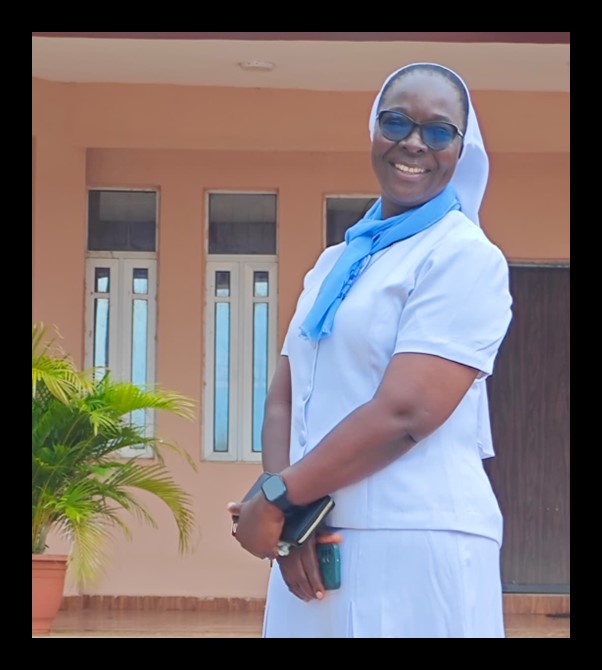
The author Sr. Kunsah Elizabeth is a religious of The Sisters of the Holy Union Congregation serving on the Area Leadership Team in Cameroon. She participated in the SEDOS Residential Programme 2026 held in Nemi, Rome, under the theme “Mission as Dependence on God and Solidarity with the Marginalized.”